Key takeaways
- A power inverter changes DC power from a battery into AC power; it makes no energy of its own.
- A generator burns fuel to make AC power and runs as long as it has fuel, but only outdoors.
- An inverter's runtime equals the battery's watt-hours, minus 10 to 15 percent lost as heat, divided by the load.
- Pure sine wave inverters suit sensitive electronics and motors; modified sine wave inverters suit simple loads like lights.
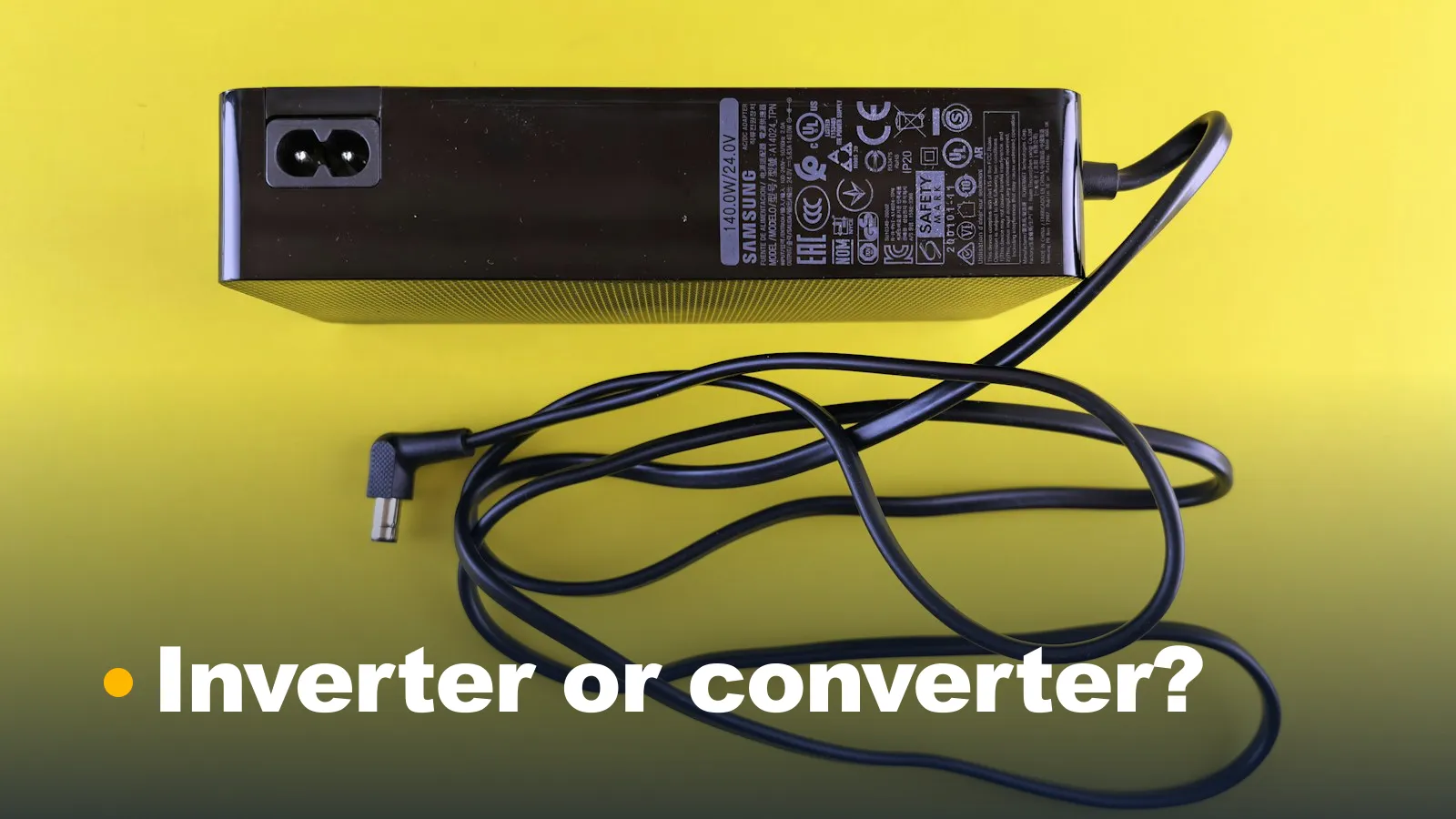
A power inverter is a device that changes direct current (DC) from a battery into alternating current (AC), the kind of power wall outlets supply, while a generator is an engine that burns fuel to make AC power. This guide explains how each one works, how they compare on runtime, noise and safety, which jobs suit each, and how to size an inverter and its battery.
What is the difference between a power inverter and a generator?
The difference is where the energy comes from: a power inverter only converts energy already stored in a battery, while a generator makes new electricity by burning gasoline, propane or diesel. An inverter is silent and safe indoors; a generator is not.
| Power inverter | Generator | |
|---|---|---|
| Energy source | A battery (car, deep-cycle or solar) | Gasoline, propane or diesel |
| Runtime | Until the battery is empty | As long as there is fuel |
| Indoor use | Yes | No, outdoors only |
| Noise | Silent or a quiet fan | Engine noise |
| Fumes | None | Carbon monoxide |
A portable power station combines a battery and an inverter in one box. Our guide to what a portable power station is explains how the 2 work together.
How does a power inverter work?
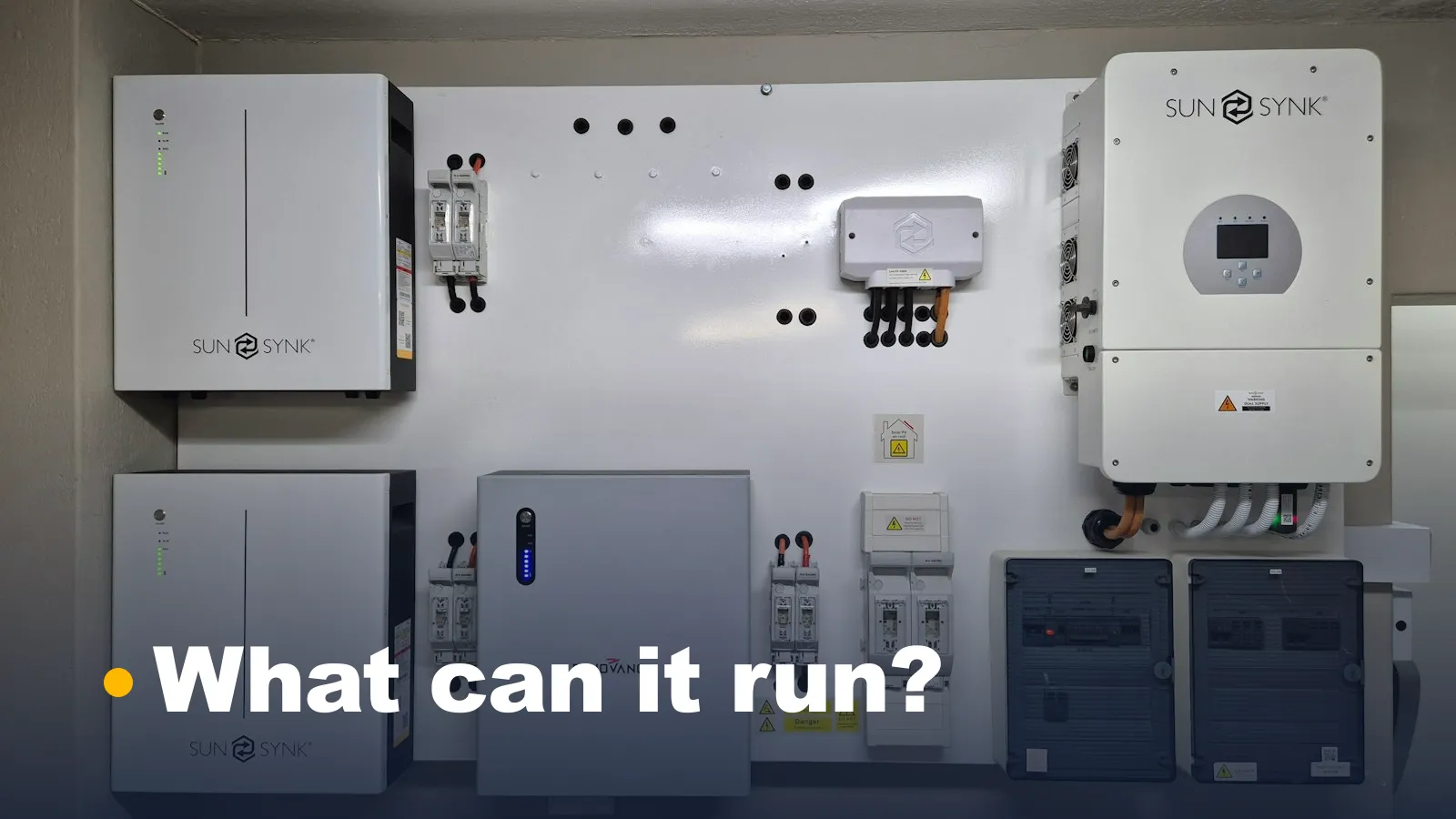
A power inverter works by switching a battery's DC power on and off very fast and shaping it into an AC wave at household voltage. Its continuous rating in watts sets the largest load it can run.
Inverters come in 2 output types:
- Pure sine wave. The output matches utility power, so it suits sensitive electronics, medical equipment and devices with motors, such as refrigerators.
- Modified sine wave. The output is a stepped approximation. It runs simple loads like lights and fans, but can cause buzzing in audio gear and extra heat in motors.
Every inverter also has a surge rating, a short peak for motors that pull 2 to 3 times their running watts when they start.
How long can an inverter run on a battery?
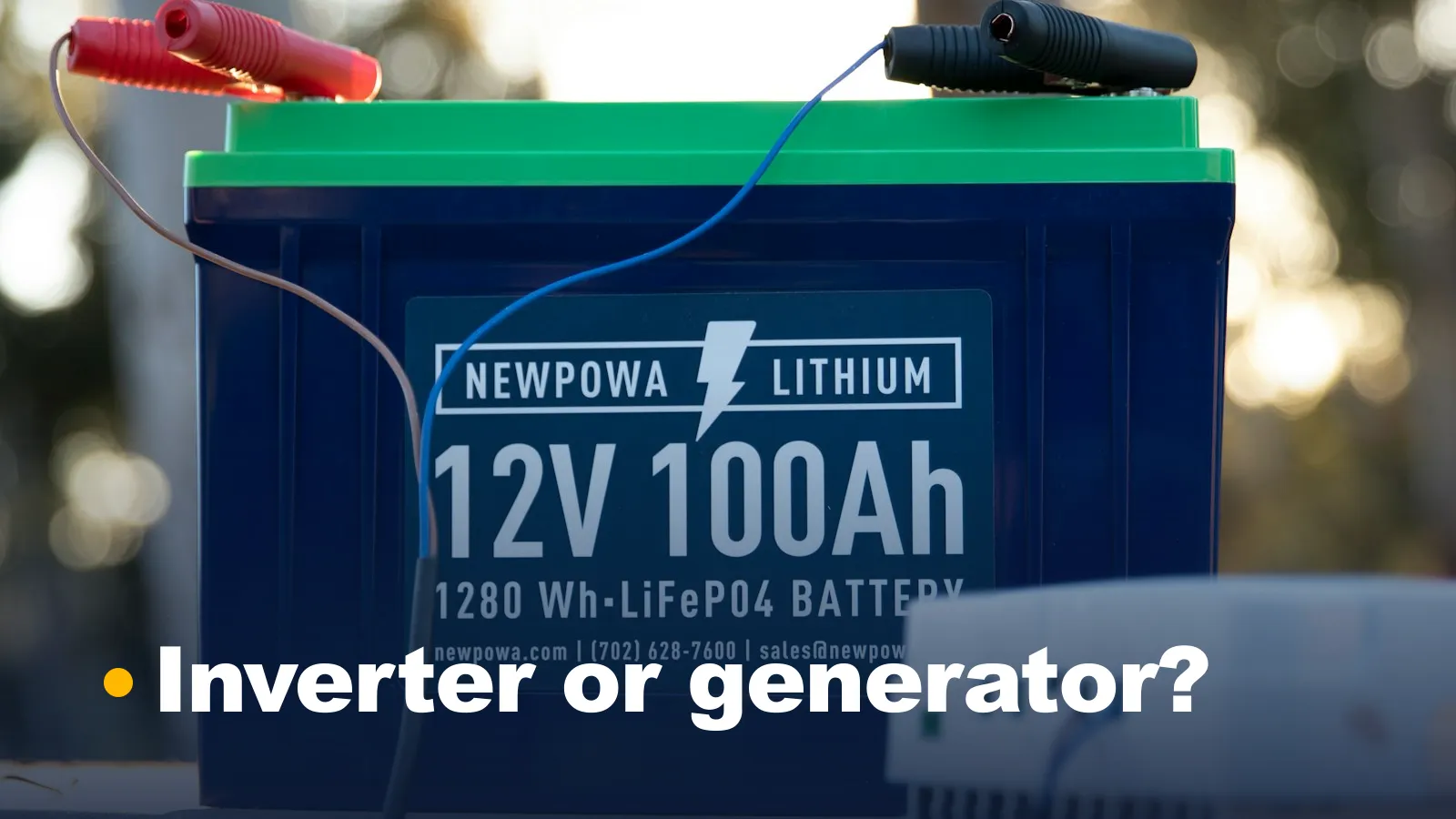
An inverter runs for the battery's watt-hours, minus 10 to 15 percent lost as heat, divided by the watts you draw. A 12 V 100 Ah battery holds 1,200 Wh, so a 300 W load runs for about 3 hours 24 minutes.
A watt-hour (Wh) is a unit of energy equal to 1 watt for 1 hour, and a battery's watt-hours equal its volts times its amp-hours. Lead-acid batteries should only be used to about half their capacity, while LiFePO4 batteries deliver nearly all of it. Our amp-hours to watt-hours guide explains the conversion.
When should you choose an inverter or a generator?
Choose an inverter for quiet, indoor and short-term power from a battery, and a generator for long outages, heavy loads and places where you can run it safely outdoors.
An inverter suits:
- Charging laptops and phones in a car or van
- Running a CPAP machine or lights overnight
- Solar setups in RVs, boats and cabins
- Apartments, where a generator cannot run
A generator suits:
- Multi-day outages with a refrigerator, well pump or space heater
- Job sites with power tools
- Places with no way to recharge a battery
Our guide to inverter generators covers the quieter fuel option, which uses an inverter inside to clean up its power.
How do you size a power inverter?
Size a power inverter by adding the running watts of everything you will power at once, then choosing an inverter whose continuous rating is above that total and whose surge rating covers any motor's start-up.
Sizing takes 3 steps:
- Add the running watts of each device, from its label or charger.
- Find the largest motor and allow 2 to 3 times its running watts for start-up.
- Pick a pure sine wave inverter with continuous and surge ratings above those numbers.
Our guide on how many watt-hours you need lists typical device draws, and our best portable power stations guide compares 5 models with built-in pure sine wave inverters.
Common questions
Can a power inverter replace a generator?
Only for small loads and short times. An inverter runs until its battery is empty, so it suits phones, laptops, lights and a CPAP overnight, while a generator suits long outages and heavy loads.
Can I run an inverter from my car battery?
Yes, for small loads. A car's 12 V battery can run a small inverter, but draining it too far can leave the car unable to start, so run the engine or use a separate battery for longer use.
What is the difference between continuous and surge watts on an inverter?
Continuous watts are the power an inverter delivers all the time. Surge watts are a short peak for motors that pull 2 to 3 times their running watts when they start.
Writes guides and reviews for ProductHunter.