Key takeaways
- Rooftop solar panels use silicon photovoltaic cells to turn sunlight into DC electricity, which an inverter converts to AC for the home.
- Home panels in 2025 commonly produce about 390 to 500 watts each, at around 21 to 23 percent efficiency.
- A panel's daily output is roughly its watts times the peak sun hours where you live, minus losses from heat, shade and the inverter.
- Net metering credits you for surplus solar power sent to the grid, but the rules vary by state and utility.
Rooftop solar panels are panels of photovoltaic cells mounted on a house that turn sunlight into electricity, which an inverter converts into the AC power the home uses. This guide covers the 4 steps from sunlight to outlet, the parts of a home solar system, how much power a panel makes, how net metering works, and what happens at night and in a power outage.
How do rooftop solar panels work?
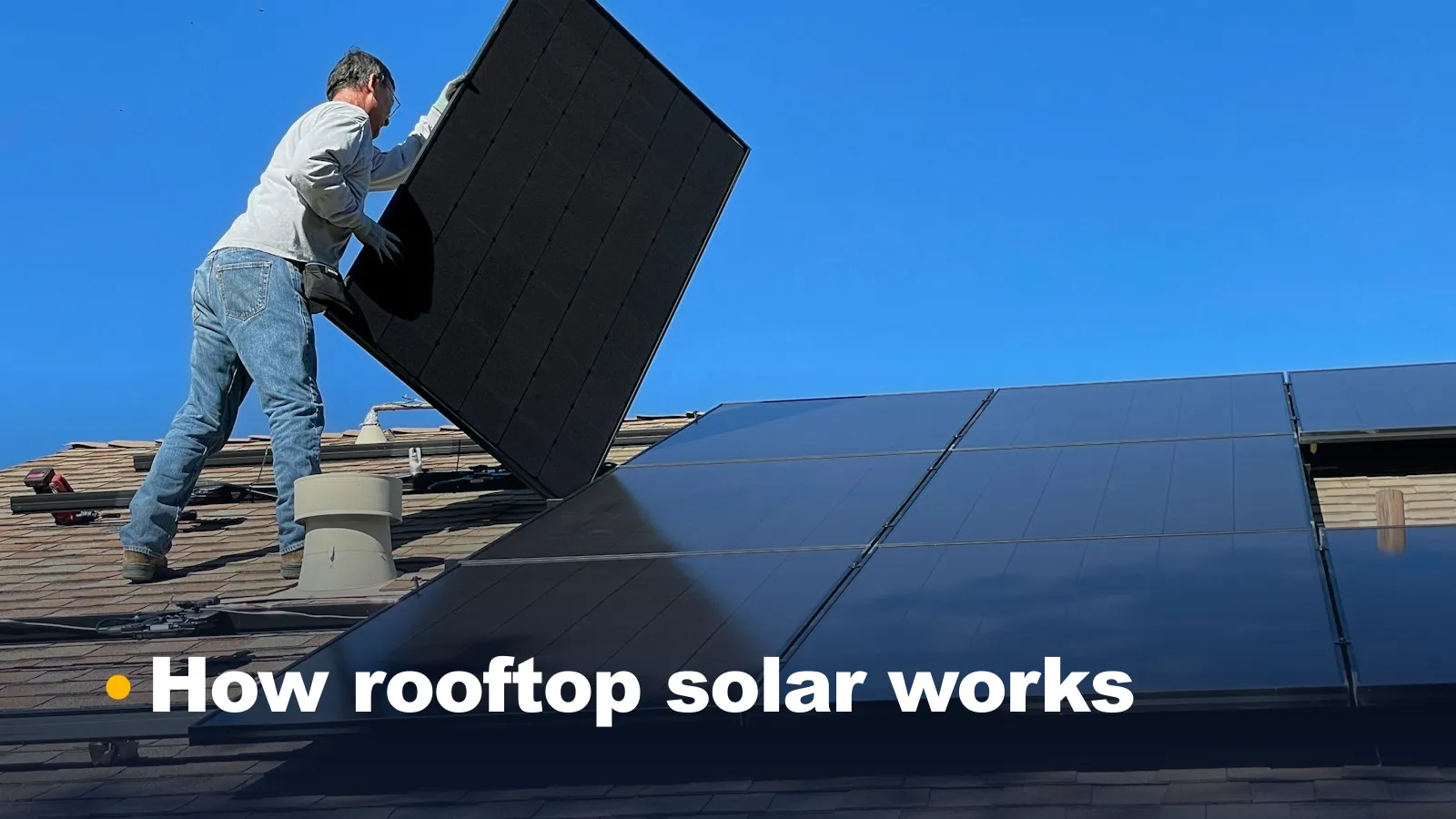
Rooftop solar panels work in 4 steps: photovoltaic cells turn sunlight into direct current (DC), wiring carries it to an inverter, the inverter converts it to alternating current (AC), and the home uses the power or sends the surplus to the grid.
- Cells absorb light. Each panel holds silicon photovoltaic (PV) cells. Light knocks electrons loose in the silicon, creating a DC electric current.
- Current flows to the inverter. Wiring carries the DC power from the panels.
- The inverter makes AC. It converts DC into the AC power your outlets and appliances use.
- The home uses it first. Surplus power flows to the grid or charges a home battery.
Panels make electricity from light, not heat. They are rated at standard test conditions of 1,000 watts of sunlight per square metre with 25°C cells, and they lose some output as they get hotter. Our guide on how a solar generator works covers the portable version of the same process.
What are the parts of a home solar system?
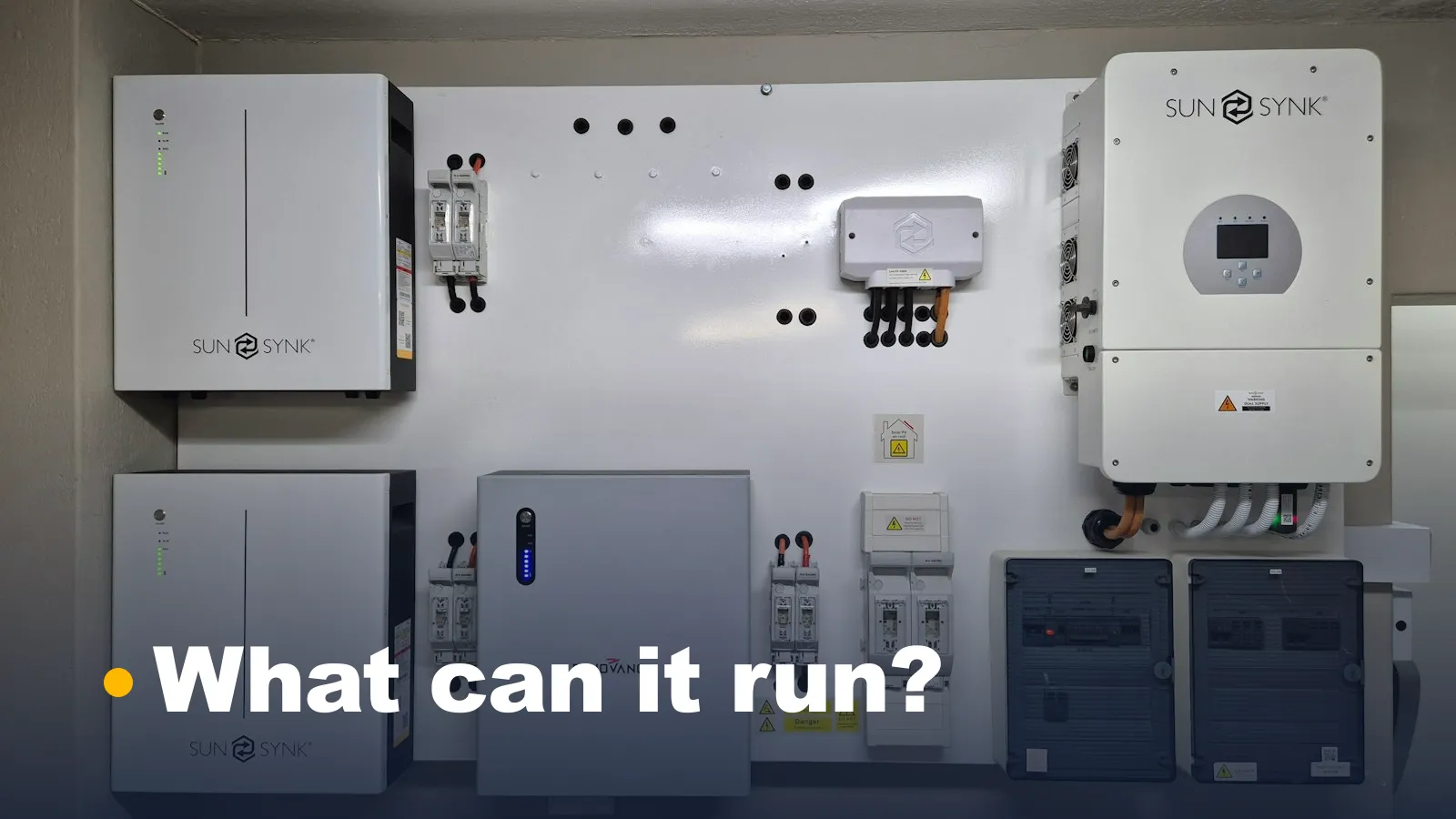
A home solar system has 5 main parts: the panels, the mounting racks, the inverter, the electrical panel and meter connection, and an optional home battery.
The inverter comes in 3 common designs:
| Inverter type | Where it sits | Main trait |
|---|---|---|
| String inverter | One unit near the electrical panel | The weakest panel limits the whole string |
| Microinverters | One small unit behind each panel | Each panel works on its own, so shade affects less |
| Power optimizers | One unit behind each panel, plus a string inverter | Each panel's output is tuned before conversion |
On an unshaded roof, string inverters and microinverters perform almost the same. Microinverters help most where trees or chimneys shade part of the roof.
How much power does a solar panel produce?
A solar panel produces roughly its rated watts times the peak sun hours where you live: a 400 W panel in 5 peak sun hours makes up to about 2 kWh a day. Home panels in 2025 commonly produce about 390 to 500 W each.
A peak sun hour is 1 hour of sunlight at 1,000 watts per square metre, the intensity used to rate panels. Real output is lower than this best case because of heat, shade, dirt, panel angle and inverter losses. Panel efficiency, the share of sunlight a panel turns into electricity, is about 21 to 23 percent for most current home panels.
The average US home used about 899 kWh a month in 2022, according to the US Energy Information Administration (EIA).
What is net metering?
Net metering is a billing system that credits you for surplus solar power your panels send to the grid, so you can use those credits when your panels make less than you need, such as at night. The rules, credit rates and limits vary by state and utility.
Check your utility's current net metering or solar export rules before sizing a system, because some places credit exported power at a lower rate than the power you buy.
Do solar panels work at night or in an outage?
Solar panels make no power at night, and a standard grid-tied system shuts off during a power outage so it cannot send electricity onto lines that workers are repairing. A home battery lets a system keep running essentials in an outage.
At night, a home draws power from the grid, uses net metering credits or uses energy stored in a battery. Our guide to home battery backup explains how a battery pairs with solar, and our best portable power stations guide compares 5 stations that also charge from portable solar panels.
Common questions
Do solar panels work on cloudy days?
Yes, but they make much less power, because clouds cut the sunlight reaching the cells. Panels make electricity from light, not heat, so cold sunny days are productive.
What happens to solar power at night?
Panels make no power at night. Homes then use grid power, credits from net metering, or energy stored earlier in a home battery.
Do rooftop solar panels work during a power outage?
Not on their own. A grid-tied system shuts off in an outage for the safety of line workers, unless it includes a home battery that can run the house separately from the grid.
Writes guides and reviews for ProductHunter.