Key takeaways
- An inverter changes direct current (DC) into alternating current (AC).
- A converter changes AC into DC, or one DC voltage into another; a phone charger is a converter.
- A transformer changes one AC voltage to another, such as 230 V to 120 V, without changing it to DC.
- RVs and boats often have both: a converter charges the battery from shore power, and an inverter runs AC outlets from the battery.
An inverter is a device that changes direct current (DC) into alternating current (AC), and a converter is a device that changes AC into DC or one DC voltage into another. This guide explains AC and DC, how inverters and converters work, the 4 common types of power-changing device, where each one is used in homes, cars and RVs, and how to tell which one you need.
What is the difference between AC and DC?
AC (alternating current) is electricity that reverses direction many times a second, the kind supplied by wall outlets and generators. DC (direct current) flows in one direction, the kind stored in batteries and made by solar panels.
| AC | DC | |
|---|---|---|
| Flow | Reverses direction | One direction |
| Common sources | Wall outlets, generators | Batteries, solar panels, USB ports |
| US home voltage | 120 V and 240 V | Varies, such as 5 V USB or 12 V car |
Most electronics run on DC inside, even when they plug into an AC wall outlet, which is why so many devices come with a charger or power brick.
What does an inverter do?
An inverter changes DC power into AC power, so a battery or solar panel can run devices that plug into a wall-style outlet. It is the part that makes a battery act like a wall socket.
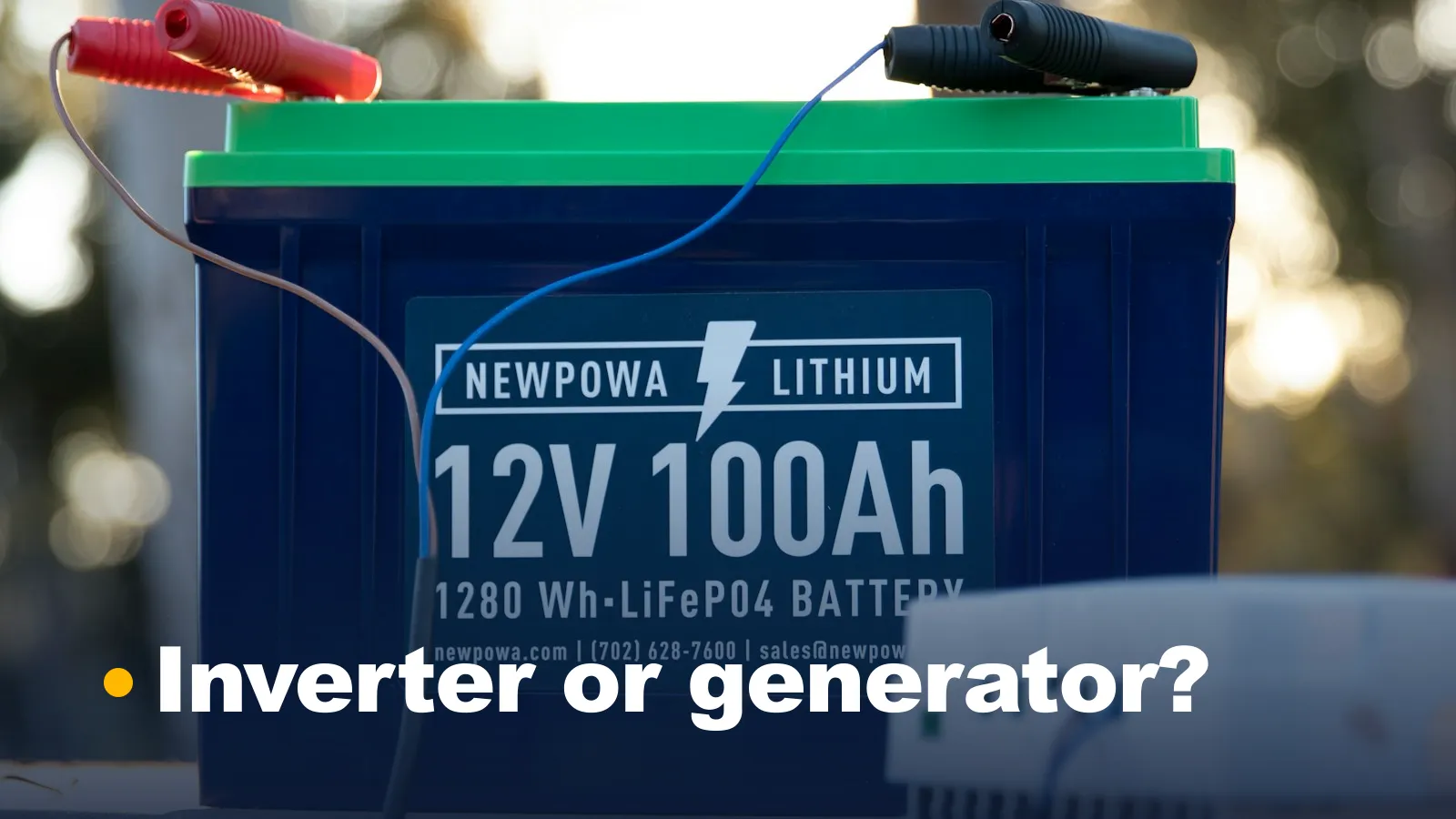
Inverters sit inside portable power stations, home batteries, solar systems and inverter generators, and they are sold on their own to run from car or deep-cycle batteries. Our guide comparing a power inverter vs a generator covers choosing and sizing one.
What does a converter do?
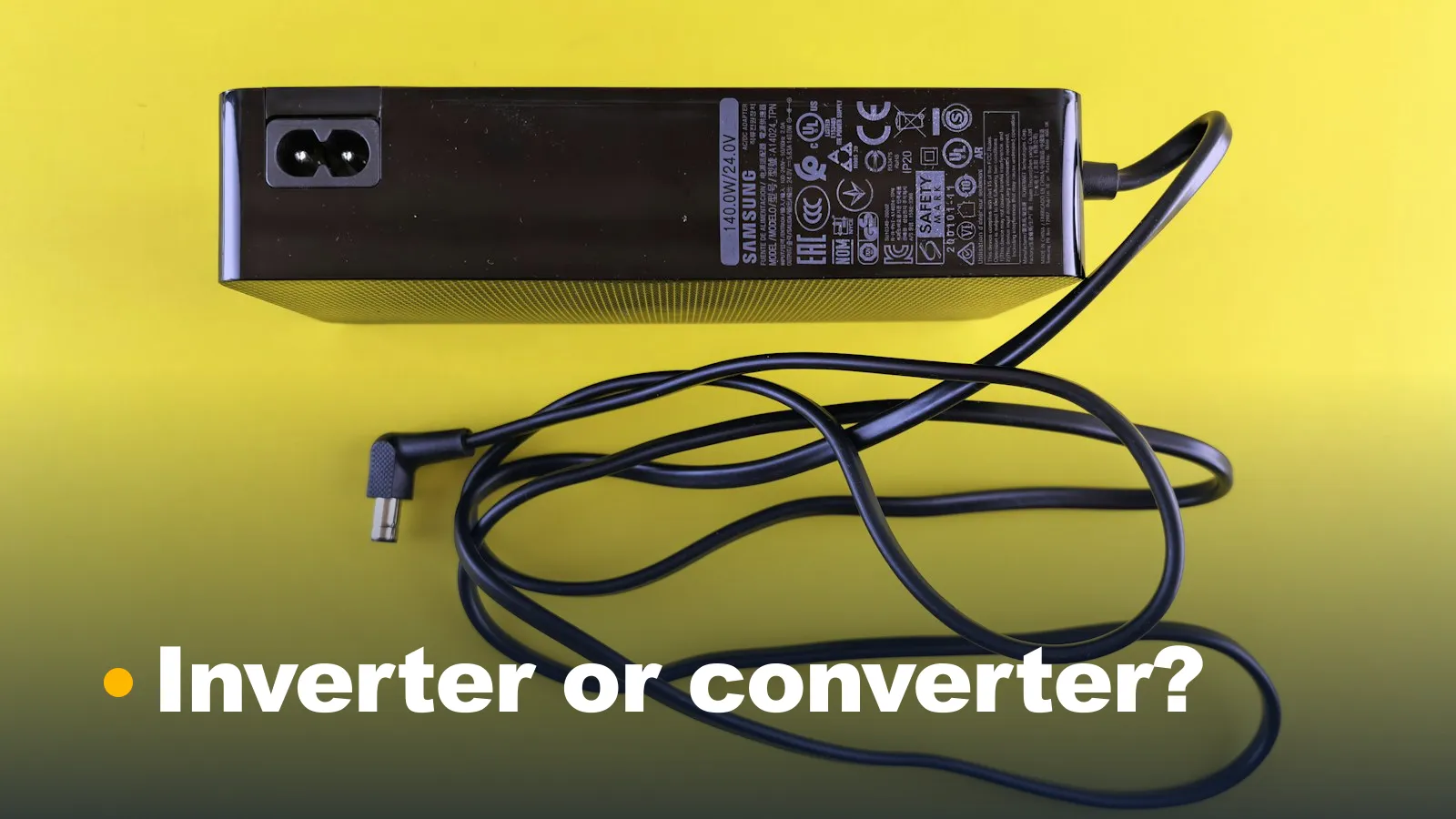
A converter changes AC power into DC power, or one DC voltage into another. A phone charger, a laptop power brick and an RV converter are all converters.
Converters come in 2 kinds:
- AC to DC. Also called a rectifier, power supply or charger. It turns wall power into the DC a device or battery needs.
- DC to DC. It changes one DC voltage to another, such as a car's 12 V to 5 V for USB, or charges a second battery from a vehicle.
What are the 4 types of power-changing device?
The 4 types are the inverter (DC to AC), the converter or rectifier (AC to DC), the DC-DC converter (DC to DC) and the transformer (AC to AC). Each is named for what it changes.
| Device | Changes | Everyday example |
|---|---|---|
| Inverter | DC to AC | Power station outlets, solar inverter |
| Converter (rectifier) | AC to DC | Phone charger, RV converter |
| DC-DC converter | DC to DC | USB car charger, solar charge controller |
| Transformer | AC to AC voltage | Travel voltage converter |
A solar charge controller is a DC-DC converter: it takes the panel's DC voltage and adjusts it to charge a battery safely. Our guide on how a solar generator works shows where it fits.
Do RVs and boats need an inverter or a converter?
RVs and boats usually need both: a converter charges the house batteries from shore power or a generator, and an inverter runs AC outlets from those batteries when no shore power is connected.
Some units, called inverter-chargers, combine both jobs in one box and switch automatically. Our guide to home battery backup explains how the same idea works for a house, and our best portable power stations guide compares 5 stations with built-in inverters and chargers.
Common questions
Is a phone charger an inverter or a converter?
A converter. It changes AC power from the wall into the low-voltage DC power a phone battery charges with.
What does an RV converter do?
An RV converter changes 120 V AC shore power or generator power into 12 V DC to charge the RV's house batteries and run its 12 V lights and fans.
Do I need a converter or a transformer for travel?
For devices that only accept one voltage, you need a voltage converter or transformer that changes the local AC voltage, such as 230 V to 120 V. Many phone and laptop chargers accept 100 to 240 V and need only a plug adapter.
Writes guides and reviews for ProductHunter.