Key takeaways
- A home battery backup stores electricity and powers your home's circuits automatically when the grid goes down.
- Two common examples: the Tesla Powerwall 3 stores 13.5 kWh with 11.5 kW of continuous power, and the Enphase IQ Battery 5P stores 5 kWh with 3.84 kW.
- The average US home used 10,791 kWh of electricity in 2022, about 29.6 kWh a day (EIA).
- With solar panels, a home battery recharges during the day and can run essentials through multi-day outages.
A home battery backup is a rechargeable battery system wired into your home's electrical panel that stores electricity and powers your circuits automatically when the grid goes down. This guide covers how a home battery works, what one can run, how long it lasts in an outage, how it works with solar panels, and how it compares with a generator and a portable power station.
How does a home battery backup work?
A home battery backup works in 3 stages: it charges from the grid or solar panels, stores energy in lithium-ion cells, and switches your backed-up circuits to battery power within moments of an outage.
- Charging. The battery fills from the grid, from solar panels, or both.
- Storing. Energy is held in kilowatt-hours (kWh), a unit equal to 1,000 watt-hours.
- Backing up. When the grid fails, the system disconnects from the grid and its inverter powers the circuits it is wired to.
A kilowatt (kW) measures power at one moment, while a kilowatt-hour (kWh) measures energy over time. A battery's kW rating sets how many appliances run at once; its kWh rating sets for how long.
What can a home battery backup run?
A home battery backup runs any circuit it is wired to, up to its continuous power rating. Two common batteries show the range:
| Battery | Usable energy | Continuous power |
|---|---|---|
| Tesla Powerwall 3 | 13.5 kWh | 11.5 kW |
| Enphase IQ Battery 5P | 5 kWh | 3.84 kW |
Essentials such as a refrigerator, lights, a router and phone charging use little power, so a battery runs them for a long time. Central air conditioning, electric heating and electric water heaters draw several kilowatts and drain a battery quickly. For that reason, some systems back up only essential circuits. Enphase batteries are modular, so you stack units for more capacity.
How long does a home battery last in an outage?
A home battery lasts its usable kWh divided by your average load in kW. A 13.5 kWh battery runs an average 1.2 kW load for about 11 hours, or a 0.5 kW essentials-only load for about 27 hours.
The average US home used 10,791 kWh of electricity in 2022, according to the US Energy Information Administration (EIA). That is about 29.6 kWh a day, or 1.2 kW on average across every hour.
How does a home battery work with solar panels?
With solar panels, a home battery stores daytime solar power that your home does not use right away, then supplies it at night or during an outage. In a long outage, the panels recharge the battery each sunny day.
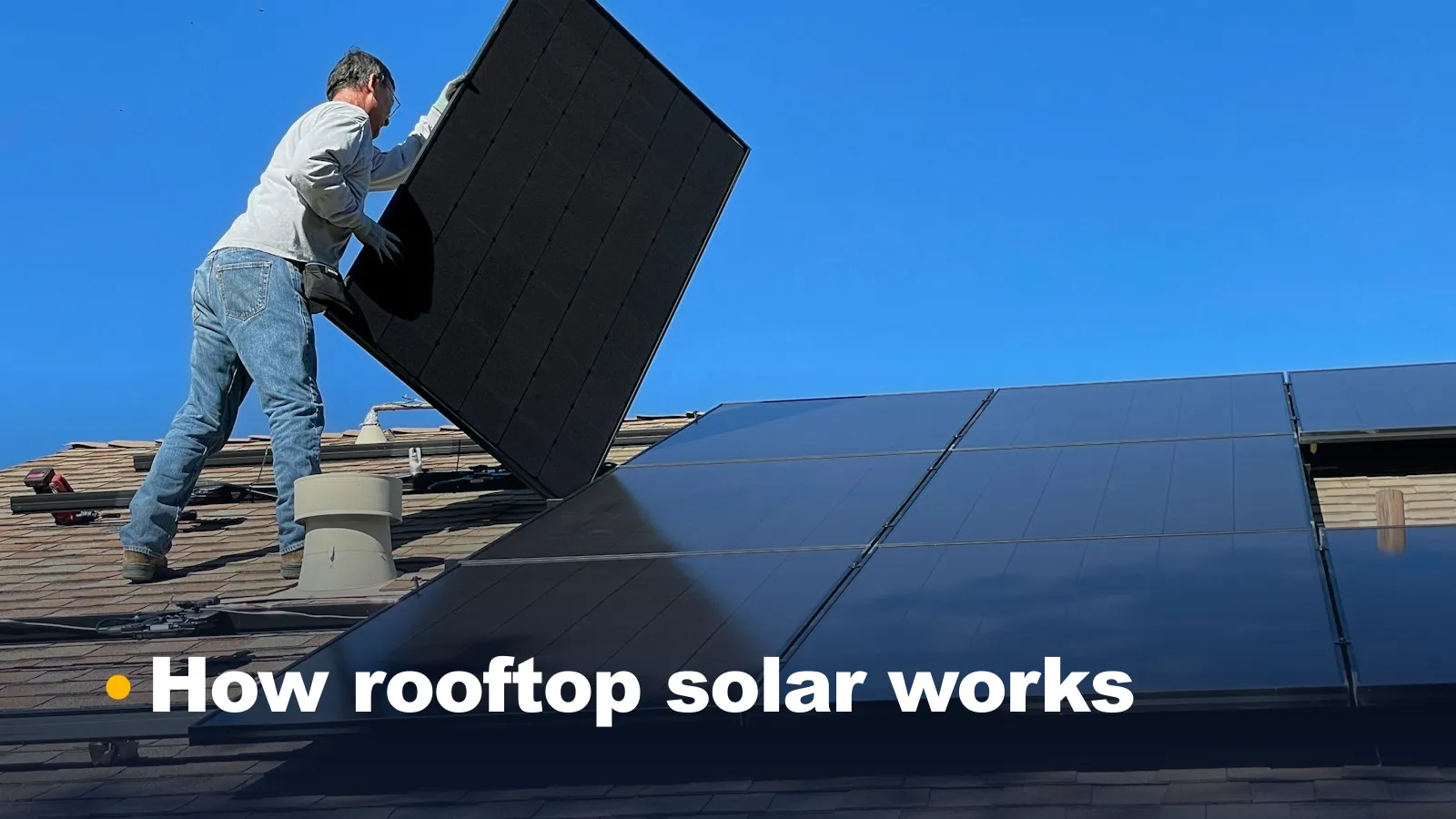
The Tesla Powerwall 3 has a built-in solar inverter, so it can replace a separate solar inverter in a new system. Our guide on how solar panels work explains the rooftop side of the system.
Home battery, generator or portable power station?
A home battery suits automatic, silent whole-circuit backup; a generator suits long outages with heavy loads; and a portable power station suits short outages and plugging in a few devices. The 3 differ in installation, fuel and runtime.
| Home battery | Standby or portable generator | Portable power station | |
|---|---|---|---|
| Installation | Wired into the electrical panel | Outdoors, often with a transfer switch | None, plug devices in |
| Switches on automatically | Yes | Standby models only | No |
| Fuel or fumes | None | Fuel and carbon monoxide | None |
| Runtime | Until the battery is empty, longer with solar | As long as there is fuel | Until the battery is empty |
Our power outage kit guide covers what else to have ready, and our best portable power stations guide compares 5 models, including the Jackery HomePower 3000, which connects to a manual transfer switch for up to 6 home circuits.
Common questions
Can a home battery run my whole house?
Sometimes. A large battery with enough continuous power, such as 11.5 kW on the Tesla Powerwall 3, can run most of a home, but heavy loads like central air and electric heating drain it fast. Some homes back up only essential circuits.
Do I need solar panels for a home battery?
No. A home battery can charge from the grid and hold power for outages. With solar panels, it also recharges from the sun during long outages.
Is a home battery the same as a portable power station?
No. A home battery is installed and wired into your electrical panel and switches on automatically. A portable power station is a battery you carry and plug devices into.
Writes guides and reviews for ProductHunter.