Key takeaways
- An inverter generator converts its engine's AC power to DC and back to clean AC, which is safe for sensitive electronics.
- Its engine speeds up and slows down with demand, which saves fuel and lowers noise; Honda says its Eco Throttle cuts fuel use by up to 40%.
- 2 compatible inverter generators can be linked in parallel to work like one larger generator.
- Like any fuel generator, it must run outdoors, at least 20 feet from windows, doors and attached garages.
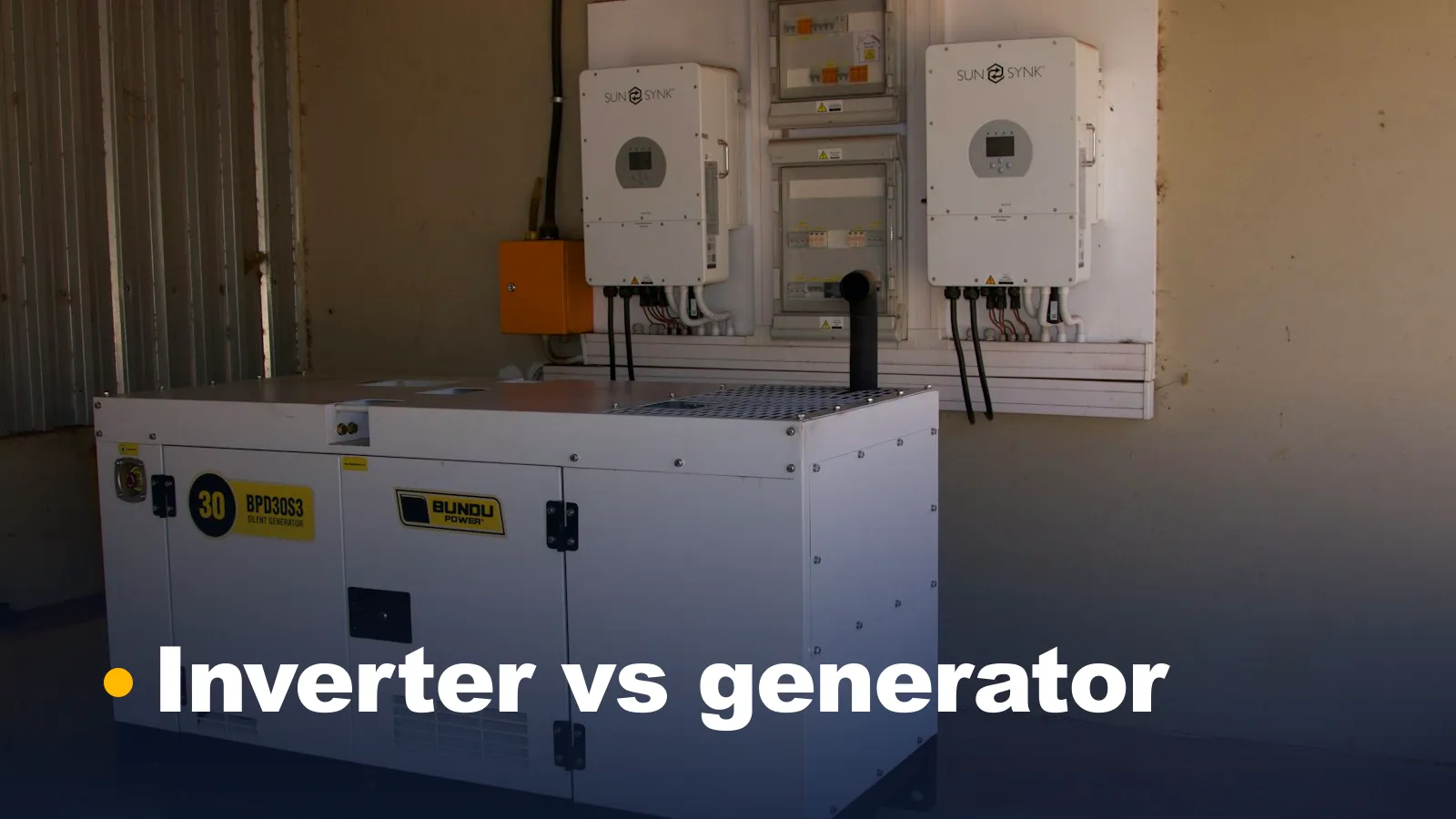
An inverter generator is a fuel-powered generator that runs its electricity through an inverter, turning the engine's raw power into clean, stable AC power that is safe for laptops, phones and other sensitive electronics. This guide covers how an inverter generator works, how it differs from a conventional generator and from a portable power station, why it is quieter and uses less fuel, and how to size one for your home.
How does an inverter generator work?
An inverter generator works in 3 steps: its engine spins an alternator that makes AC power, a rectifier converts that AC power to direct current (DC), and an inverter converts the DC back into clean alternating current (AC) for your devices.
- The engine drives an alternator, which produces raw AC electricity.
- A rectifier converts it to DC, smoothing out the irregular output.
- The inverter converts DC back to AC at a steady voltage and frequency.
Honda describes the result as power clean enough to run even sensitive electronic equipment. A conventional generator skips steps 2 and 3 and sends the alternator's output straight to your devices.
How is an inverter generator different from a conventional generator?
An inverter generator differs from a conventional generator in 4 ways: cleaner power, an engine that changes speed with demand, lower noise at light loads, and the option on many models to link 2 units together.
| Inverter generator | Conventional generator | |
|---|---|---|
| Power output | AC to DC to clean AC | Raw AC from the alternator |
| Engine speed | Varies with demand | Runs at a fixed speed |
| Noise at light load | Lower | Higher |
Because the engine throttles down when demand is low, it burns less fuel. Honda says its Eco Throttle system reduces fuel consumption by up to 40%. 2 compatible inverter generators can also run in parallel, linked by a cord or kit, to do the work of 1 larger generator.
How is an inverter generator different from a portable power station?
An inverter generator makes electricity by burning fuel, while a portable power station stores electricity in a battery and releases it through its own inverter. Both deliver clean AC power, but only the power station is safe to use indoors.
A generator keeps running as long as you refuel it, which suits multi-day outages and heavy tools. A power station runs silently with no fumes, recharges from the wall, a car or solar panels, and suits short outages, apartments and medical devices. Our guide to what a portable power station is explains the battery side, and our best portable power stations guide compares 5 large models.
How big an inverter generator do you need?
You need an inverter generator whose running watts cover everything you will power at once, and whose starting watts cover the surge when a motor starts. Motors in refrigerators and fans pull 2 to 3 times their running watts for a moment at start-up.
Sizing takes 3 steps:
- Add up the running watts of every device you will run together, from each device's label.
- Find the largest motor in the list and allow for its start-up surge.
- Pick a generator rated above the running total, with starting (peak) watts above the surge.
How do you use an inverter generator safely?
Use an inverter generator only outdoors, at least 20 feet from windows, doors and attached garages, because its exhaust contains carbon monoxide. A quieter engine does not make the exhaust any safer.
Ready.gov adds 4 rules: install carbon monoxide detectors with battery backup, keep the generator dry, use heavy-duty extension cords, and let it cool before refuelling. Our power outage kit guide lists the rest of what to have ready, and our Jackery review covers a fuel-free alternative.
Common questions
Is an inverter the same thing as a generator?
No. A generator makes electricity from fuel, while an inverter only converts DC power into AC power. An inverter generator combines both: an engine-driven generator with a built-in inverter.
What does the inverter in a power station do?
It converts the battery's DC power into AC power for wall-style outlets. A portable power station has an inverter but no engine, so it stores energy rather than making it.
Are inverter generators quieter?
Yes, usually. Their engines slow down when the load is light instead of running at full speed all the time, so they make less noise at low and medium loads.
Writes guides and reviews for ProductHunter.