Key takeaways
- Start with a test print: 3DBenchy, a small boat, checks overhangs, bridging and accuracy and takes about 35 minutes on Creality's Ender-3 V3 KE.
- Useful first projects include drawer dividers, cable clips, a phone stand (about 2 hours) and replacement knobs (about 15 minutes).
- Pick the filament for the job: PLA indoors, PETG for damp places, ASA outdoors and TPU for parts that bend.
- Many free models are licensed for personal use only, so check the license before selling prints.
The best things to 3D print as a beginner are small, useful objects that print in a few hours, such as organizers, stands and replacement parts. This guide lists 30 ideas in 7 groups, explains which filament suits each, covers print times and running costs, and explains what you can legally sell.
What should you 3D print first?
Print a test model first to check your printer is set up well. These are the 2 classic test prints:
- 3DBenchy. A small boat designed as a "torture test": its bow tests overhangs, its cabin roof tests bridging, and calipers can check its accuracy. It's in the public domain and takes about 35 minutes on Creality's Ender-3 V3 KE.
- Calibration cube. A 20 mm block that checks size accuracy, first-layer adhesion and bed leveling, in about 30 minutes, says Creality.
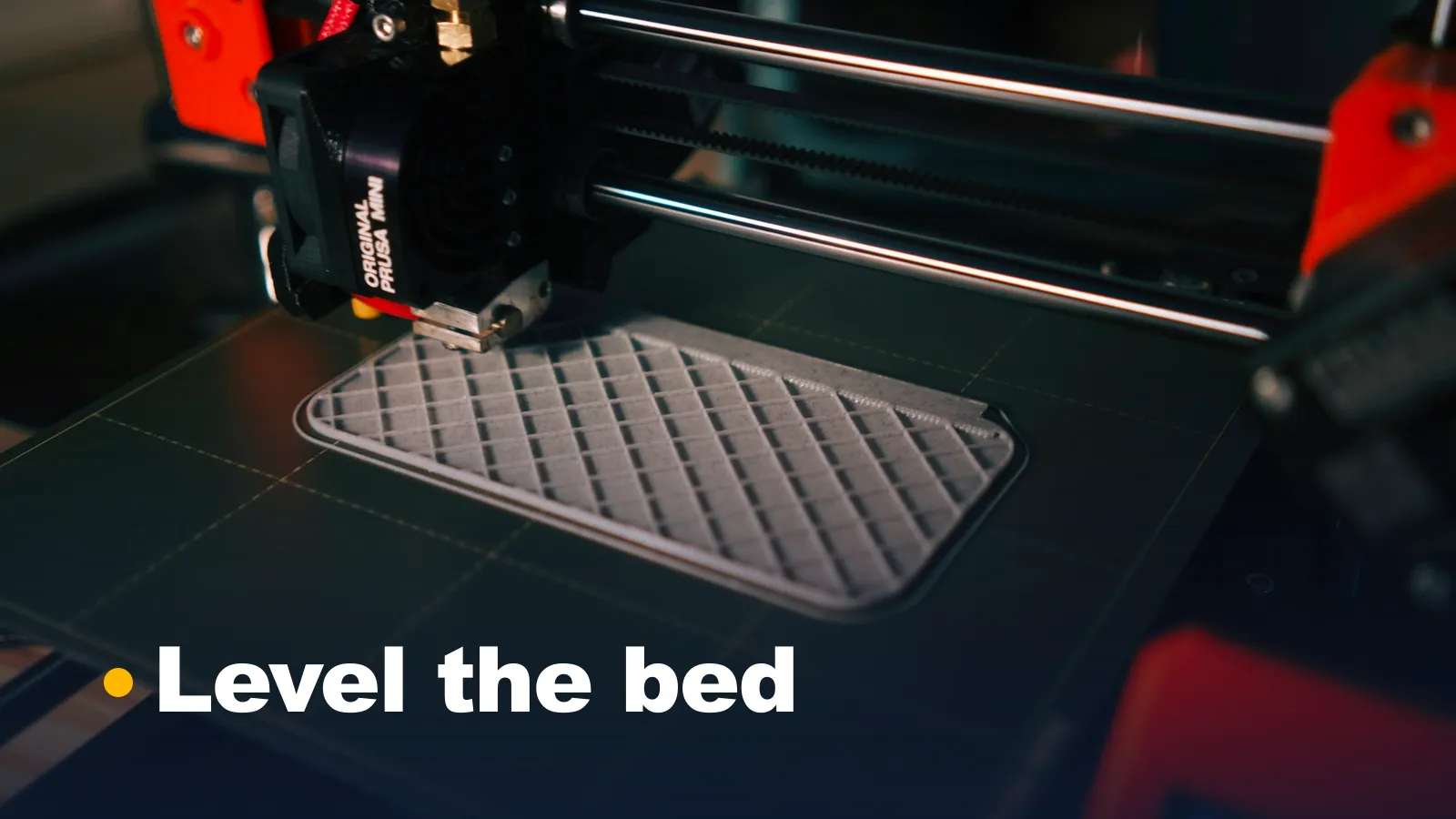
If the first layer doesn't stick, our guide to 3D printer bed leveling shows how to fix it.
What useful things can you 3D print?
Household fixes and organizers are the most useful beginner prints. These 30 ideas come from Creality's and Prusa's project guides:
| Group | Ideas | Filament |
|---|---|---|
| Home organization | Drawer dividers, spice racks, bag clips, soap dishes, toothbrush holder | PLA; PETG for damp rooms |
| Desk and tech | Phone stand, cable clips, headphone hook, glasses stand, device mounts | PLA or PETG |
| Tools and repairs | Replacement knobs, furniture feet, cabinet bumpers, drill guides, door-handle lever extension | PLA or PETG |
| Toys and games | Dice tray, card deck box, simple toys | PLA or PETG |
| Garden | Plant markers, seed labels, hose guides, succulent planter | PETG or ASA |
| Gifts | Keychains, pet ID tags, name signs, ornaments, bookmarks | PLA |
| Cosplay | Helmets, gauntlets, armor plates | PLA, primed and painted |
Creality says a door-handle lever extension takes under 30 minutes and helps people with limited grip strength. Prusa notes you can also replicate broken household parts, which is often quicker than ordering a spare.
Which filament should you use?
Match the filament to where the print will live. Prusa's material guides give these 5 basics:
- PLA: the easiest to print, but it softens above 60°C and breaks down in sunlight, so keep it indoors.
- PETG: tough, resists water and humidity, and suits most uses below 80°C.
- ASA: UV-resistant and suitable for outdoor use, with heat resistance up to 93°C.
- ABS: heat-resistant, but it yellows and turns brittle outdoors and releases styrene fumes, so it needs ventilation.
- TPU: flexible and wear-resistant, but harder to print.
Be careful with anything that touches food. Prusa says tiny layer grooves can harbor bacteria, and Formlabs adds that a brass nozzle can contaminate prints, so don't print dishes or food containers without a food-safe coating. Damp filament also prints badly, so see our guide to drying 3D printer filament.
How long does it take to 3D print something?
Small prints take minutes, and large ones take hours or days. Creality gives these examples: about 15 minutes for a replacement knob, 15 to 30 minutes for a keychain, 2 hours for a phone stand, and 9 hours or more for a cosplay helmet.
4 settings change print time the most:
- Size: bigger models use more plastic and take longer.
- Layer height: Creality says 0.1 mm layers take about twice as long as 0.2 mm layers.
- Infill: 20% infill often cuts print time in half compared with solid infill.
- Material: PETG and TPU usually print slower than PLA.
Is 3D printing expensive to run?
Running costs are mainly filament and electricity. Prusa says 1 kg of filament prints about 1 kg of objects, and it printed over 80 different objects from a single 1 kg spool.
Power use is modest: Prusa says its printers average about 80 W printing PLA and 120 W printing ABS. Our guide to how much a 3D printer costs covers the full running costs.
Can you sell things you 3D print?
Yes, if you designed the model or hold a license that allows commercial use. Many free models use a Creative Commons NonCommercial license, which forbids use mainly for money, so you'd need the designer's permission to sell prints.
Printables offers both personal-use and commercial-use licenses in its store, and Creality advises selling only what you designed or have an explicit commercial license for. Printing logos or characters can also infringe trademarks or copyright. 3D-printed guns are regulated by federal law under the ATF's frame-or-receiver rule.
Free models are easy to find on Printables (from Prusa), MakerWorld (from Bambu Lab), Thingiverse (from UltiMaker) and Thangs. Our 5 best 3D printers list compares printers for beginners.
Common questions
How long does it take to 3D print something?
From minutes to many hours. Creality gives about 15 minutes for a knob, 35 minutes for a Benchy, 2 hours for a phone stand and 9 hours or more for a cosplay helmet. Your slicer shows the estimate for any model.
Is 3D printing expensive to run?
Running costs are mostly filament and electricity. Prusa says 1 kg of filament prints about 1 kg of objects, and it printed over 80 objects from one spool. Its printers average about 80 W printing PLA.
Can you legally sell 3D printed items?
Yes, if you designed them or have a commercial license. Creative Commons NonCommercial files can't be sold without the designer's permission, and printing logos or characters can infringe trademarks or copyright.
Can you 3D print metal?
Yes, but not on a home filament printer. Industrial processes fuse metal powder with a laser (DMLS or SLM), or bind metal powder and then sinter it in a furnace, according to Formlabs.
Writes guides and reviews for ProductHunter.