Key takeaways
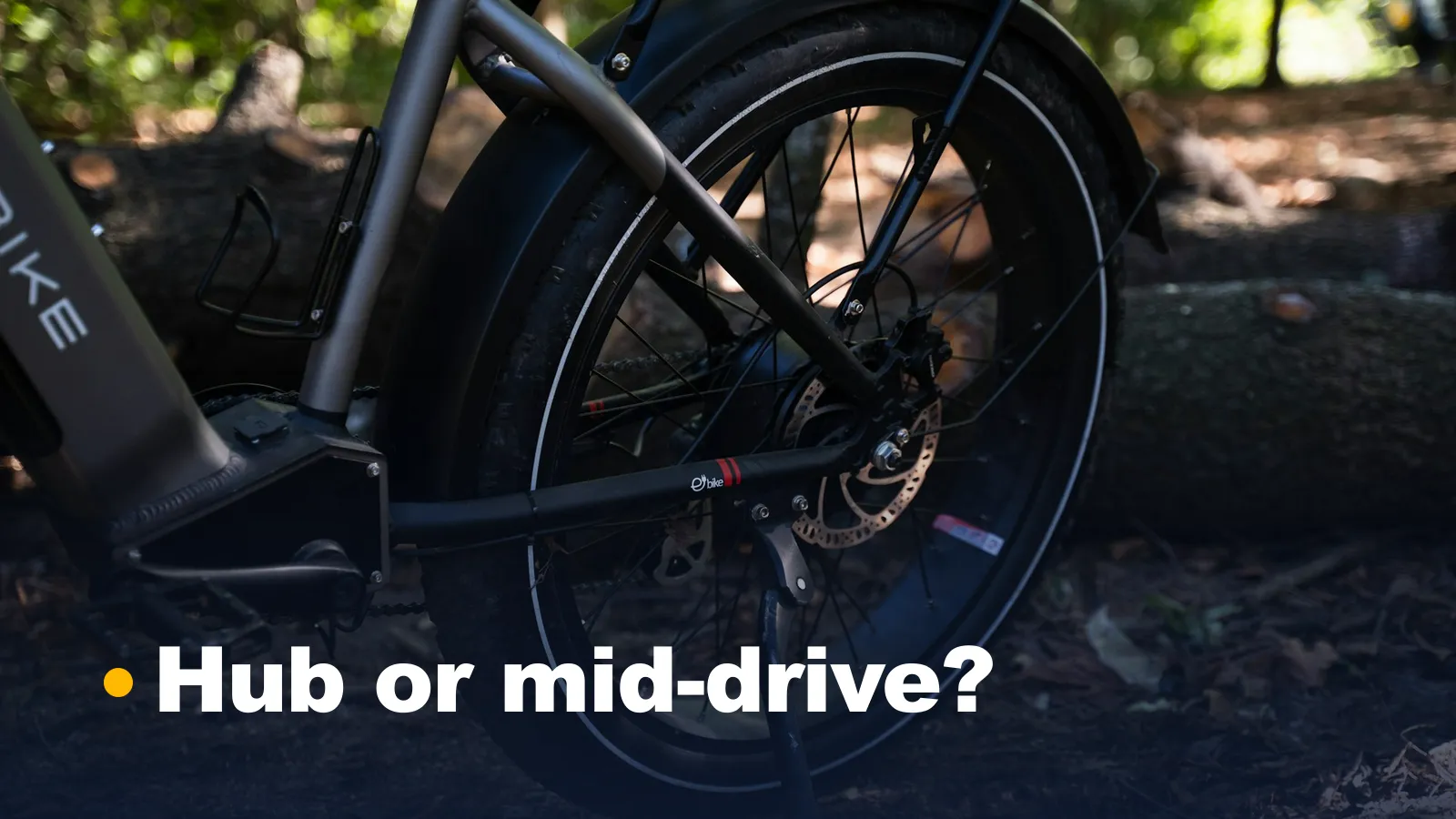
- A hub motor sits in the wheel and drives it directly; a mid-drive sits between the pedals and drives the chain through the bike's gears.
- Mid-drives suit hills, trails and cargo: Bosch's Performance Line CX and Shimano's EP801 both make 85 Nm of torque.
- Hub motors suit flat commutes: they fit standard frames, often include a throttle and don't wear the chain.
- Mid-drives wear the chain and cassette faster, while a hub motor makes the wheel harder to remove when you fix a flat.
A hub motor is an e-bike motor built into the front or rear wheel, while a mid-drive is a motor at the pedals that drives the chain. This guide compares how each works, their torque and power, sensors, pros and cons, crank differences and which suits your riding.
What is the difference between a hub motor and a mid-drive?
A hub motor turns the wheel directly and ignores the bike's gears; a mid-drive turns the cranks, so its power goes through the chain and gears. Road.cc describes both this way, and adds that higher-quality mid-drives need a frame designed around them.
Hub motors come in 2 kinds, according to Rad Power Bikes:
- Geared hubs use internal gears for strong low-speed torque and coast freely downhill. They're smaller and lighter than direct-drive hubs, says road.cc.
- Direct-drive hubs have few moving parts, run quietly and suit long, flat, faster rides, and they're the only type that can do regenerative braking.
A rear hub keeps weight low and leaves the fork unstressed, while a front hub can affect steering, Rad and road.cc say.
How do their torque and power compare?
Mid-drives usually make more torque, a measure of turning force in newton-metres (Nm) that matters most on hills. These are makers' figures for 7 motors:
| Motor | Type | Torque | Power |
|---|---|---|---|
| Bosch Performance Line CX | Mid-drive | 85 Nm | 250 W rated, 600 W max |
| Shimano EP801 | Mid-drive | 85 Nm | 250 W rated, 600 W max |
| Yamaha PW-X3 | Mid-drive | 85 Nm | 250 W rated |
| Bafang M620 | Mid-drive | 160 Nm | Up to 1,000 W |
| Aventon Level.3 | Rear hub | 60 Nm | 500 W sustained, 864 W peak |
| Lectric XP 3.0 | Geared rear hub | 55 Nm | 500 W rated, 1,000 W peak |
| Mahle X35+ | Rear hub | 40 Nm | 250 W |
Torque only tells part of the story. A mid-drive multiplies its torque through the gears, so it stays efficient on steep climbs and at low speed, road.cc explains. Our guide to e-bike classes explains the 750 W limit for US e-bikes.
Which is better for hills, handling and maintenance?
A mid-drive wins on hills and handling; a hub motor wins on simplicity and drivetrain wear. These are the 4 main trade-offs:
- Hills. Mid-drives use the gears to climb; Trek advises against hub motors if you regularly ride steep or long climbs.
- Handling. A mid-drive sits low and central between the wheels, while a hub adds weight to one wheel, says road.cc.
- Drivetrain wear. Rad says a mid-drive stresses the chain so it wears faster, and if the chain breaks you can't ride. Hub motors don't wear the drivetrain.
- Flats. A hub motor makes the wheel harder to remove, and BikeRadar notes most hub wheels are specific to the brand. A mid-drive bike takes a standard rear wheel.
Throttles are another difference: Rad says most mid-drive bikes don't have one, while many hub-motor bikes do, and you can often ride home on the throttle if the chain breaks.
What sensors do hub and mid-drive motors use?
Mid-drives usually use a torque sensor, while cheaper hub motors often use a cadence sensor, according to road.cc. Electrek explains the 2 types:
- Cadence sensor: detects whether you're pedaling, not how hard. The motor switches on at a set level, with some lag.
- Torque sensor: measures how hard you press the pedals and scales the help to match, so it feels closer to a normal bike.
Many hub-motor bikes now have torque sensors too, including the Aventon Level.3 and the Mahle X35+ system.
Which motor suits which rider?
Choose a hub motor for flat or rolling commutes and a mid-drive for hills, trails or heavy cargo. Road.cc and Trek recommend these matches:
| Riding | Better choice | Why |
|---|---|---|
| Flat commuting | Hub motor | Simpler, lighter, often has a throttle |
| Frequent hills | Mid-drive | Climbs through the gears |
| Mountain biking | Mid-drive | Balanced handling; most e-mountain bikes use one |
| Cargo | Mid-drive or high-torque hub | Mid-drives handle loads through the gears |
If you're converting a bike you already own, our guide to e-bike conversion kits compares hub and mid-drive kits. Our Macfox electric bikes review tests one maker's range, and our 5 best electric bikes list compares ready-made models.
Common questions
Is a mid-drive e-bike better than a hub motor?
For hills, trails and heavy loads, yes, because it uses the bike's gears and keeps weight low and central. For flat commuting, a hub motor is simpler, often has a throttle and doesn't wear the drivetrain.
What are the disadvantages of a hub motor?
5 main ones: weight sits on one wheel, the wheel is harder to remove for a flat, hill climbing is weaker (especially on direct-drive hubs), it doesn't use the gears, and many hub wheels are specific to the brand.
Are e-bike cranks different?
On a mid-drive, yes. The cranks bolt onto the motor's own spindle, often the ISIS splined standard on Bosch's 4th-generation and Yamaha's PW-X3 motors, and chainline differs by motor. Hub-motor bikes use standard cranksets.
Which e-bikes should you stay away from?
The CPSC says to buy e-bikes certified to UL 2849, avoid batteries rebuilt by unqualified people or made from used cells, and use only the charger supplied or recommended by the maker.
Writes guides and reviews for ProductHunter.