Key takeaways
- Battery size, measured in watt-hours, is one of the biggest differences between e-bikes, from about 360 Wh to 960 Wh in our tested group.
- Motor power, frame and suspension, brakes, safety certification and brand support make up the rest of the cost.
- Most e-bike lithium-ion batteries last about 500 to 1,000 full charge cycles.
- A UL 2849 certified electrical system is worth looking for, because it covers the battery, charger and motor together.
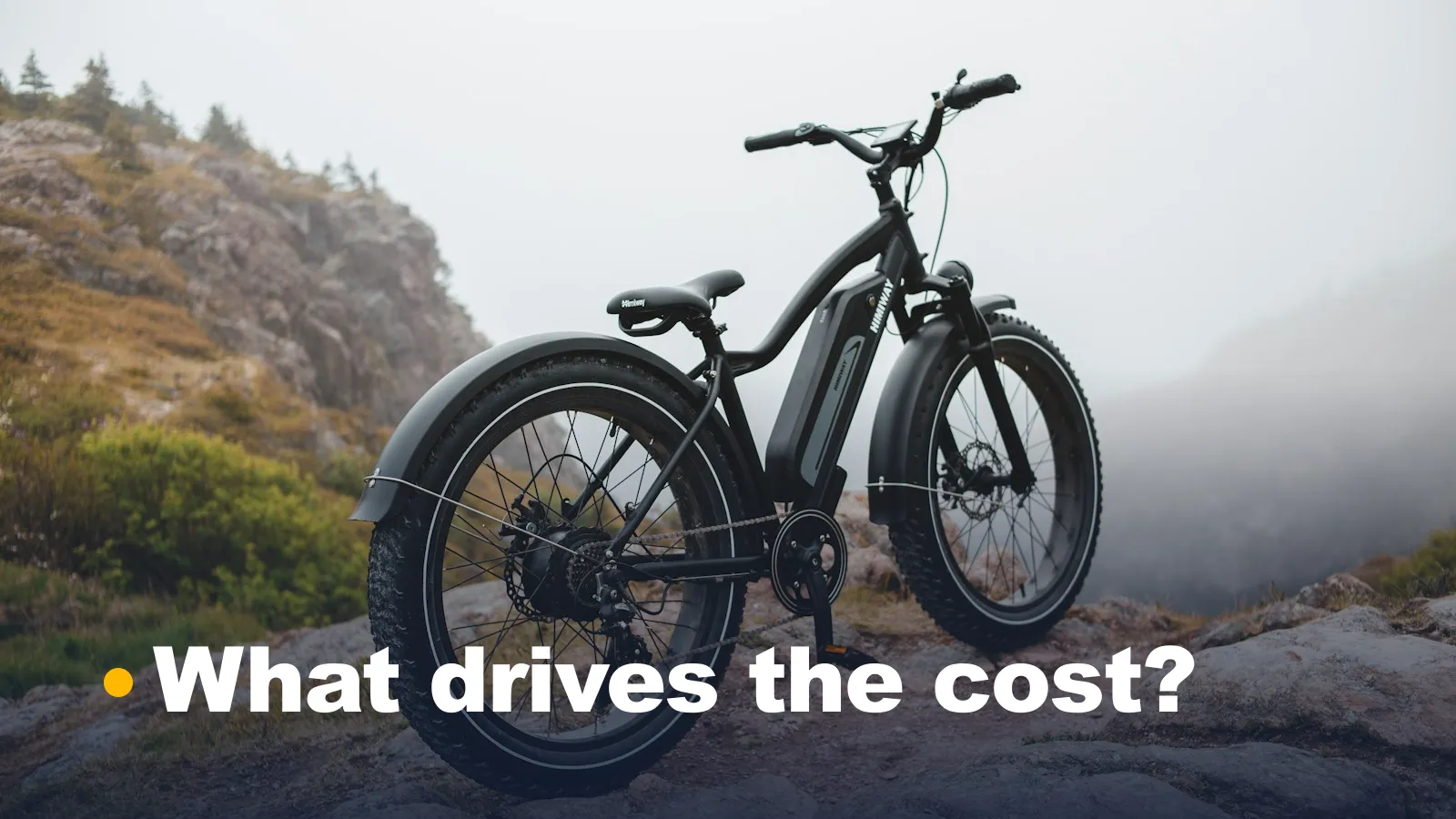
The cost of an electric bike is set mostly by 6 parts and features: the motor, the battery size, the frame and suspension, the brakes, the safety certification and the brand behind it. This guide explains what each factor adds, how long an e-bike battery lasts, which e-bikes to avoid, and how to decide what you actually need. It does not list prices, which change often, but it shows what separates a basic e-bike from a premium one.
What makes one e-bike cost more than another?
6 factors make one e-bike cost more than another: motor power and type, battery capacity, frame and suspension, brakes, safety certification, and the brand's dealer and service support. Battery capacity is one of the biggest differences.
| Factor | Basic e-bike | Premium e-bike |
|---|---|---|
| Motor | Smaller hub motor, about 250 to 350 W | 750 W hub or a mid-drive motor |
| Battery | About 360 Wh | 720 Wh and more |
| Frame and suspension | Rigid frame, front fork at most | Fat tires, front or full suspension |
| Brakes | Mechanical disc brakes | Hydraulic disc brakes |
| Safety certification | Battery only, or none listed | UL 2849 for the whole electrical system |
| Support | Online support | Dealer network for repairs |
How does the battery affect an e-bike's cost?
The battery affects an e-bike's cost more than most parts because its size sets the range: a bigger battery stores more watt-hours (Wh), the unit of energy, so the bike goes farther per charge. Watt-hours equal the battery's volts times its amp-hours.
The 5 e-bikes in our best electric bikes guide show the range. The Jasion EB5 uses a 36 V 10 Ah battery, or 360 Wh, with up to 40 miles of range. The Jasion EB5 MAX uses 48 V 15 Ah, or 720 Wh. The Jasion YR20 uses 48 V 20 Ah, or 960 Wh, with up to 80 miles of range by the maker's figure.
How long does an e-bike battery last?
Most e-bike lithium-ion batteries last about 500 to 1,000 full charge cycles before their capacity drops noticeably. A battery past that point still works, but each charge takes you fewer miles.
A charge cycle is one full use of the battery's capacity, so 2 half charges count as 1 cycle. Riding 3 full charges a week, 500 to 1,000 cycles works out to roughly 3 to 6 years. Heat shortens battery life, so store and charge the battery out of hot sun and hot cars.
Which e-bikes should you avoid?
Avoid e-bikes whose batteries and electrical systems carry no safety certification, because poorly made lithium-ion batteries can overheat and catch fire. Look for UL 2849, which tests the battery, charger and motor together.
UL 2271 is a related standard that covers the battery alone. Aftermarket batteries and chargers are a common risk, because they are not part of a certified system. In our electric bikes guide, the Jasion EB5 Roamer ST and EB5 MAX list UL 2849 certification.
How do you choose the right e-bike for your money?
Choose the right e-bike by matching each cost factor to how you ride, so you pay only for features you will use. 4 questions sort most riders:
- How far do you ride? Short commutes suit a battery of about 360 to 500 Wh. Long rides suit 720 Wh or more.
- Is your route hilly? Hills favour a stronger motor and a bigger battery.
- What surfaces do you ride? Gravel, sand and snow favour fat tires and suspension. Paved commutes do not need them.
- Do you want local service? A dealer network helps with repairs and warranty claims.
Our guides on e-bike classes and how fast an electric bike can go cover speed limits, and our FreeGo electric bikes review looks at another brand's range.
Common questions
How long does an electric bike battery last?
Most e-bike lithium-ion batteries last about 500 to 1,000 full charge cycles. After that the battery still works, but it holds less charge, so you get fewer miles per ride.
What e-bikes should you stay away from?
Avoid e-bikes with no safety certification for the battery and electrical system, and avoid unknown aftermarket batteries and chargers. Look for UL 2849 on the complete bike or at least UL 2271 on the battery.
Is a bigger battery always better?
Not always. A bigger battery gives more range, but it also adds weight. A 360 Wh battery suits short commutes, while 720 Wh or more suits long rides and hilly routes.
Writes guides and reviews for ProductHunter.