Key takeaways
- A battery management system (BMS) is an electronic circuit that monitors a battery's voltage, current and temperature and disconnects it before damage happens.
- A LiFePO4 BMS has 5 main jobs: stop overcharging, stop deep discharge, limit current, block charging below freezing, and balance the cells.
- Battle Born's BMS blocks charging above 14.6 V on a 12 V battery, and most BMS block charging below 32°F (0°C).
- A battery that reads 0 to 5 V after running flat is usually in low-voltage disconnect and needs a 12 V source to wake it.
A battery management system (BMS) is an electronic circuit, built into every LiFePO4 battery, that monitors the battery's voltage, current and temperature and disconnects it before anything can damage the cells. This guide covers the 5 jobs a BMS does, how cell balancing works, the limits that make a battery shut off, and how to wake a battery after the BMS cuts it.
What does a BMS do in a LiFePO4 battery?
A BMS protects a LiFePO4 battery by watching each cell and switching the battery off when voltage, current or temperature goes outside safe limits. LiTime, a LiFePO4 battery maker, calls it the battery's "brain".
A LiFePO4 (lithium iron phosphate) battery is a lithium battery made of cells of about 3.2 V each; a 12 V battery has 4 cells in series. The BMS sits between those cells and the battery's terminals, so every amp in or out passes through it.
What are the 5 jobs of a BMS?
A LiFePO4 BMS does 5 jobs: it stops overcharging, stops deep discharge, limits current, blocks charging in freezing temperatures, and balances the cells.
| Job | What the BMS does | Example limit |
|---|---|---|
| Overcharge protection | Stops charging current at the top voltage | 14.6 V on a 12 V battery (Battle Born) |
| Over-discharge protection | Disconnects the battery when it is empty | Low-voltage disconnect |
| Overcurrent and short circuit | Cuts power above the rated current | 100 A continuous, 200 A for 30 seconds (Battle Born 100 Ah) |
| Low-temperature protection | Blocks charging below freezing | 32°F (0°C) on most BMS |
| Cell balancing | Keeps all cells at the same charge | Passive or active balancing |
The maximum for any single LiFePO4 cell is 3.65 V, which is why a 12 V battery's charging ceiling is 14.6 V. Our LiFePO4 voltage chart shows the voltage at every charge level.
How does a BMS balance the cells?
A BMS balances cells by evening out their charge, so no single cell fills or empties before the others. Battle Born describes 2 methods: passive balancing drains the higher cells until they match the lower ones, and active balancing moves charge between cells.
Balancing matters because the weakest cell sets the limit for the whole battery. If 1 cell reaches 3.65 V first, the BMS stops charging even though the others are not full.
Why does a BMS shut a battery off?
A BMS shuts a battery off when it detects a fault: too high a voltage, too low a voltage, too much current or the wrong temperature. Each fault triggers a different response.
- High voltage. Battle Born's BMS blocks charging above 14.6 V but still lets the battery power your devices.
- High current. The battery disconnects and tries to reconnect after 5 seconds. A true short circuit does not reconnect.
- Low voltage. The BMS disconnects the battery when it runs flat, so a voltmeter reads only 0 to 5 V.
- Cold. Most BMS block charging below 32°F (0°C), because charging below freezing damages LiFePO4 cells permanently.
Our guide to how to charge a LiFePO4 battery covers the right charger settings to avoid tripping the BMS.
How do you wake a battery after a BMS shutdown?
Wake a LiFePO4 battery from low-voltage disconnect by connecting a 12 V source, such as a lithium-compatible charger or another 12 V battery, then charge it normally. Battle Born gives 4 steps:
- Disconnect everything from the battery.
- Connect a 12 V source. Many chargers need to see more than 10 V before they charge, so Battle Born suggests a lithium jump pack, a charger such as the Victron Blue Smart IP65, or another battery above 12 V.
- Check the voltage. A voltmeter should read above 10 V once the battery wakes.
- Charge it fully. Battle Born says to do this within 5 days of the shutdown, because leaving the battery at 0% for longer can damage it and void the warranty.
Does a LiFePO4 battery need a BMS?
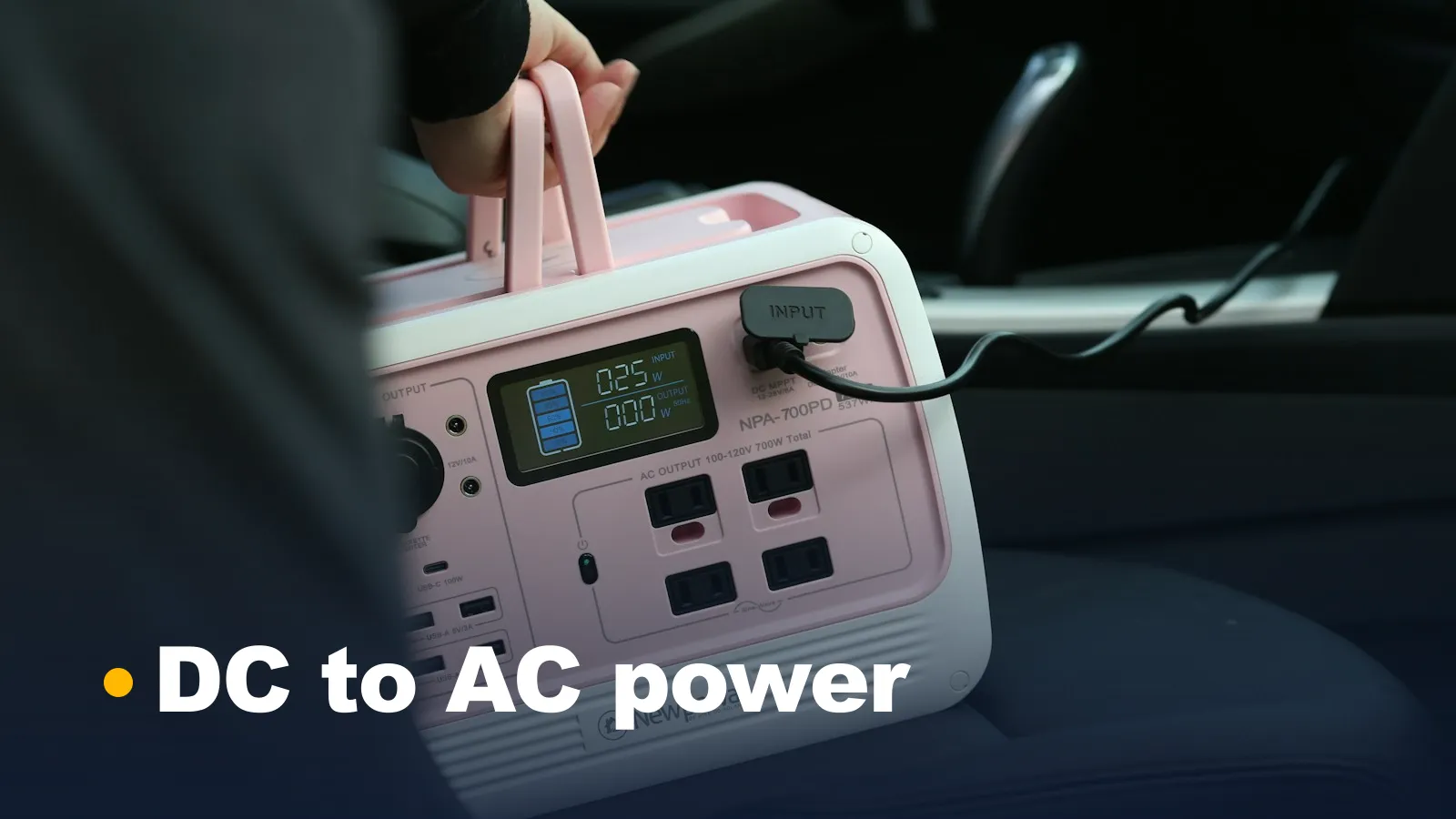
A LiFePO4 battery should always have one. Battle Born says a BMS is essential, not optional, for lithium batteries, and builds one into every battery it sells. Portable power stations have one too, protecting the cells behind their outlets.
Our guide to what a portable power station is explains where the BMS sits, and our best portable power stations guide compares 5 LiFePO4 models.
Common questions
Do you need a special charge controller for a LiFePO4 battery?
You need a charge controller with a LiFePO4 profile or adjustable voltages. Battle Born recommends charging its 12 V batteries at 14.2 to 14.6 V, and the BMS stops charging above about 14.6 V.
How do you check if a BMS is working?
Measure the battery with a voltmeter. A healthy 12 V LiFePO4 battery reads above 10 V. A reading of 0 to 5 V after the battery ran flat means the BMS has disconnected it. Batteries with Bluetooth show the BMS status in an app.
Can a LiFePO4 battery work without a BMS?
It should not. Battle Born says a BMS is essential for lithium batteries, because without one nothing stops the cells from overcharging, draining too far or charging below freezing.
What is the 80/20 rule for lithium batteries?
It means keeping a battery between about 20% and 80% charge to reduce wear. Battle Born says its LiFePO4 batteries can be used down to 0%, and the BMS does not shut them off at 20%.
Writes guides and reviews for ProductHunter.