Key takeaways
- In a survey of 1,796 e-bike owners, commuting was the second most common trip, and riders said they ride farther but arrive less sweaty or tired.
- One study measured e-bikes using an average of 1.36 kWh of electricity per 100 miles, about $0.25 at an average US home rate.
- Wear a helmet with the CPSC compliance label, and use a white front light and red rear light or reflector at night.
- Charge with the maker's charger while you're there to watch it, never overnight or while you're out.
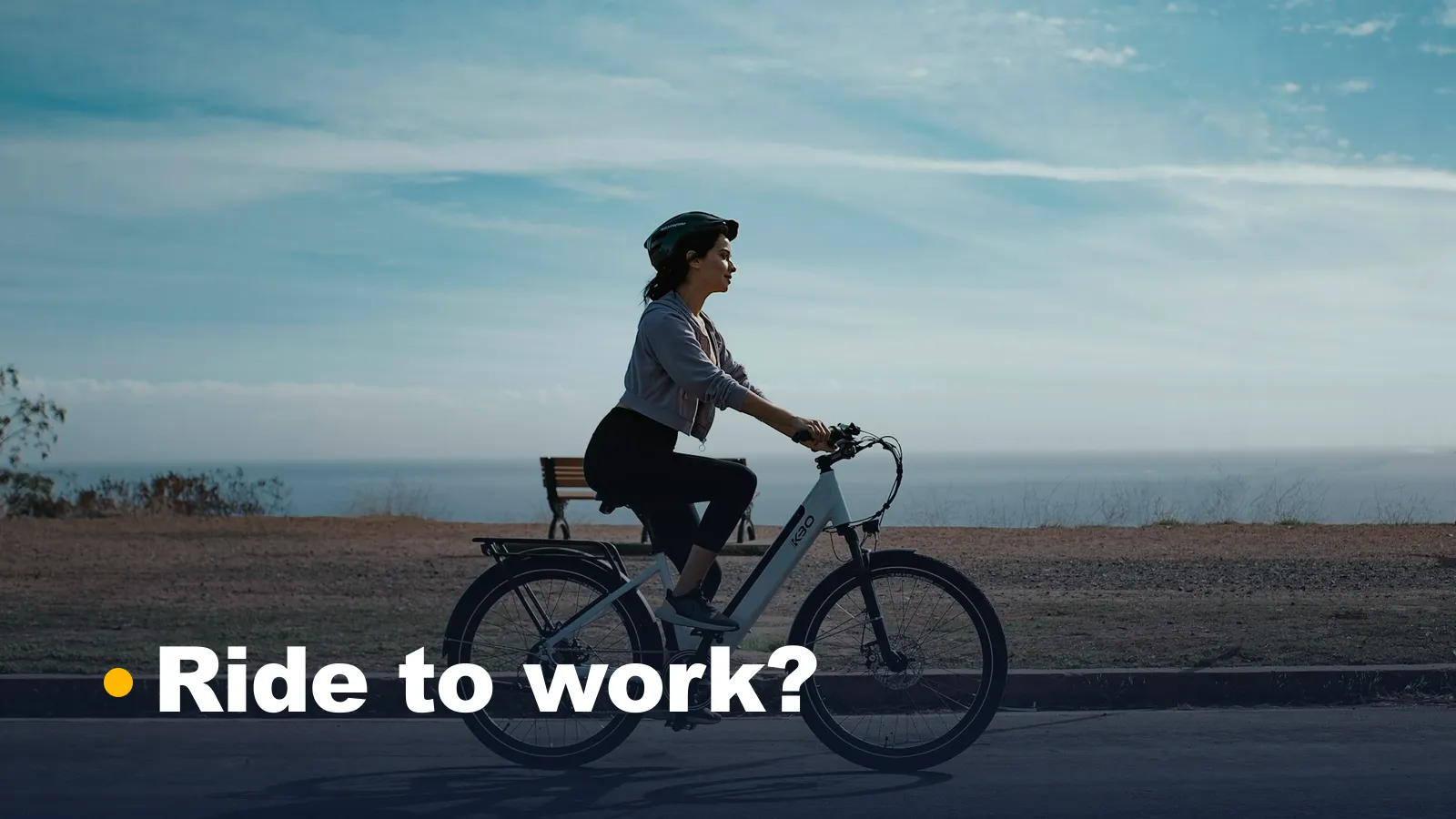
Commuting by e-bike means riding an electric bike, a bicycle with a battery-powered motor that helps you pedal, to work or school instead of driving or taking transit. This guide covers why people switch, what it costs to run, the gear you need, the rules that apply, and how to charge the battery safely.
Why commute by e-bike?
E-bikes make longer and hillier commutes easier, so you arrive less tired and less sweaty. In a Portland State University survey of 1,796 e-bike owners, commuting made up 32.7% of trips, second only to recreation and exercise.
The same survey found 3 barriers that stopped people riding a regular bike: hills (53.6%), long distances (40.3%) and arriving sweaty (31.6%). Owners said they ride farther but are less sweaty or tired, and 45.8% of the trips that replaced a car trip were commutes. Our guide to e-bike classes explains how fast each class can assist you.
How much does an e-bike commute cost to run?
Electricity costs very little: the E-Bike 1000 MPG Project measured 30 bikes over 3,457 miles and found an average of 1.36 kWh per 100 miles. At an average US home rate of $0.186 per kWh, that's about $0.25 per 100 miles.
A kilowatt-hour (kWh) is the unit your electricity bill is measured in. The study's range ran from 0.8 to 3.3 kWh per 100 miles, depending on the bike and how it was ridden.
Maintenance costs more than electricity. REI and iFixit say an e-bike's extra weight and motor torque wear brake pads, chains and tires faster than on a regular bike. Our guide to what affects the cost of an e-bike covers the bike itself.
What gear do you need to commute by e-bike?
You need 3 essentials, plus a few comforts for daily riding:
- A certified helmet. The CPSC says bike helmets made after 1999 must meet its safety standard; look for the compliance label inside, and replace a helmet after any crash.
- Lights. Most states require a white front light and a red rear light or reflector at night. Oregon, for example, requires a front light visible from 500 feet.
- A good lock, because you'll leave the bike parked for hours.
Fenders, a rear rack and panniers (bags that clip to the rack) make wet days and carrying a laptop easier.
What rules apply to e-bike commuters?
In most states, e-bikes follow bicycle rules: PeopleForBikes' model law treats the 3 classes of low-speed e-bikes as bicycles, with the same rights and duties as bike riders. The model law, adopted by at least 36 states by 2021, also exempts e-bikes from motor vehicle registration, licensing and insurance.
Rules still vary by state. Some states require helmets for younger riders on Class 3 e-bikes, and some set a minimum age for Class 3. Check your state's guide on the PeopleForBikes website before your first ride.
How do you charge an e-bike battery safely?
Charge only with the charger that came with the bike, and stay nearby while it charges. The US Consumer Product Safety Commission (CPSC) gives 4 rules:
- Be present when charging. Never charge while asleep or away from home.
- Use the maker's charger or one it recommends.
- Unplug when it's done.
- Never throw lithium batteries in the trash or recycling.
The New York City Fire Department adds: plug the charger straight into a wall outlet, never an extension cord, and stop using a battery that overheats. UL 2849 is a safety certification for an e-bike's whole electrical system, including the battery, motor and charger. Our 5 best electric bikes guide compares commuter-friendly picks, and our FreeGo e-bike review tests one in daily use.
Common questions
How much does it cost to charge an e-bike for commuting?
Very little. The E-Bike 1000 MPG Project measured an average of 1.36 kWh per 100 miles, about $0.25 at $0.186 per kWh. A 20-mile round trip 5 days a week is about 100 miles.
Do you need a license to commute on an e-bike?
Not in most states. PeopleForBikes' model law, adopted by at least 36 states, exempts e-bikes from the registration, licensing and insurance rules for motor vehicles. Check your state's rules.
Can I get a tax break for commuting by bike?
Not at the federal level in 2026. The $20-a-month bicycle commuting benefit was suspended from 2018 and ended permanently for tax years after 2025.
Do I need a special helmet for an e-bike?
For most commuting, a CPSC-certified bike helmet. The CPSC says motorized bikes that reach 20 mph or more fall into its moped helmet category, while a bike helmet may suit riding under 20 mph.
Writes guides and reviews for ProductHunter.