Key takeaways
- Yes, you can ride most e-bikes in light to moderate rain, but Rad Power Bikes says to avoid large puddles, streams and very heavy rain.
- E-bikes are water-resistant, not waterproof: Aventon rates its bikes IPX4, and Lectric rates its models IPX5 or IP65.
- Brake earlier and run 5 to 10 psi less tire pressure in the wet, says the City of Portland.
- Never use a pressure washer: Bosch calls high pressure a no-go because water can get into the motor and hub bearings.
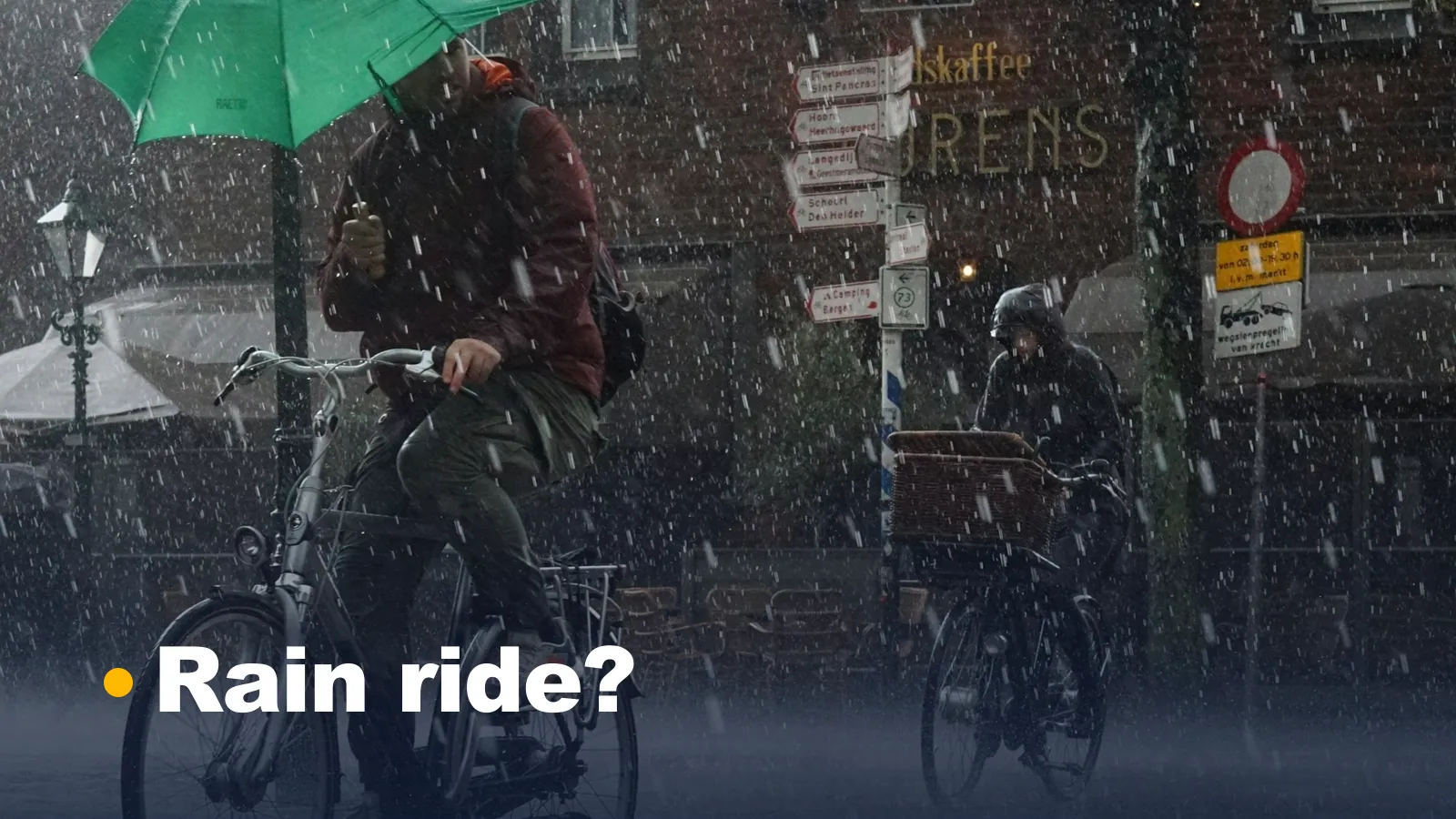
Riding an e-bike in the rain means taking a bike with a motor, battery and display out in wet weather, which most makers allow within limits. This guide explains what makers say, what IP ratings mean, 5 tips for riding safely, how to clean and dry your bike afterwards, and what to check if it stops working.
Can you ride an e-bike in the rain?
Yes, in light to moderate rain: makers design e-bike parts to resist water, but not to be submerged. Rad Power Bikes says its e-bikes "aren't 100% waterproof", so avoid large puddles, streams and very heavy rain, and never submerge the bike or its battery.
Other makers agree on the limits. Aventon says most e-bikes are water-resistant rather than waterproof, and Liv (Giant's women's brand) warns against water deep enough to cover the motor or battery. In thunder and lightning, Rad says to stop and find a dry shelter.
What do IP ratings mean for an e-bike?
An IP (Ingress Protection) rating is a code from the IEC 60529 standard that shows how well a part keeps out dust and water. The first digit covers dust, the second covers water, and an X means it wasn't tested for that. These are the 5 ratings you'll see most:
| Rating | What it's tested against | Example |
|---|---|---|
| IPX4 | Splashing water from any direction | Aventon e-bikes and motors |
| IPX5 | Low-pressure water jets | Lectric XP4 and XPress2 |
| IPX6 | Powerful water jets | |
| IP65 | Dust-tight, plus water jets | Lectric XP Lite2, XPedition2, XPeak2 |
| IP67 | Dust-tight, plus 30 minutes in 1 m of water | Aventon's Ramblas motor |
Ratings don't stack, so an IP67 part isn't automatically rated against water jets. Cyclingnews also notes a rating protects for a set time, not forever.
How do you ride an e-bike safely in the rain?
Slow down and give yourself more room, because wet roads cut grip and lengthen stopping distances. Follow these 5 tips:
- Brake earlier. BikeRadar says stopping distances increase in the wet. Rim brakes must clear water off the rim first, and disc brakes do better but aren't immune.
- Lower your tire pressure a little. The City of Portland suggests 5 to 10 psi less than usual for more grip.
- Avoid metal and leaves. Portland warns that steel plates, rail tracks, grates and wet leaves get much slicker. Cross rails at 90 degrees and don't brake or turn on metal.
- Skip puddles. They can hide potholes, and Aventon advises avoiding standing water.
- Be seen. The NHTSA (National Highway Traffic Safety Administration) says to wear reflective or fluorescent gear in bad weather, REI recommends front and rear lights, and BikeRadar says to use them even in daytime.
What should you do after riding in the rain?
Dry the bike, the chain and the battery contacts before you charge or store it. Follow these 4 steps:
- Wipe it down with a clean, dry cloth, as Rad suggests, and store it upright somewhere dry.
- Dry and lube the chain. Rad suggests a wet lube for sustained rainy riding, and Bosch says to wipe off the excess and keep lube off the disc brakes.
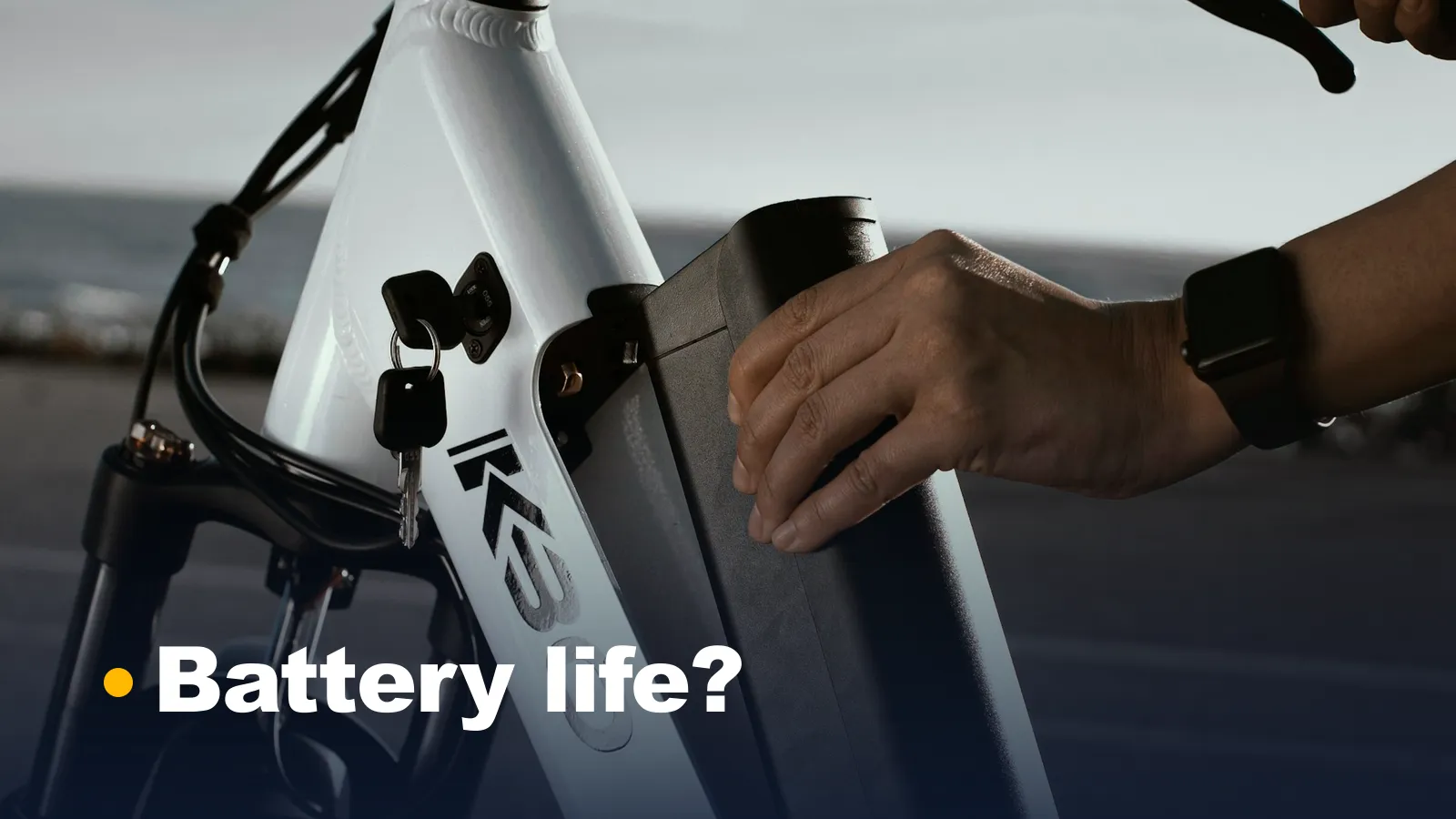
- Let the battery compartment dry. Trek says small amounts of water in the dock are fine, but it must be completely dry before you put the battery back.
- Charge only when dry. Bosch says to charge between 32°F and 104°F (0°C to 40°C), and our guide to e-bike battery life explains how to store it.
Can you hose down an e-bike?
Yes, with a gentle low-pressure hose, but never a pressure washer. Bosch says high pressure is "simply a no-go" because water can get into the bearings of the motor and hubs.
Bosch recommends bike shampoo, a brush and a soft sponge. It also says to remove the battery and, if possible, the display, and to cover any display that stays on the bike. Liv adds a warning: don't wash the bike upside down, because water can pool in the motor and battery.
Can you leave an e-bike out in the rain?
Not for long. Rad says not to leave an e-bike in the rain for long periods, and Aventon says keeping it outside increases the risk of damage.
If it has to stay outside, use a waterproof cover and take the battery indoors, as Rad and Trek suggest. Remove the cover after the rain so moisture can evaporate. Lectric's warranty does not cover water damage, so a garage, shed or porch is the safer place.
Why won't my e-bike work after rain?
Moisture in a connector or on the battery contacts is a common cause. Rad's troubleshooting steps for a bike that won't turn on are to charge the battery fully, then check the battery and tray contacts and the display and battery connectors for dirt or moisture.
If it still won't power on, contact the maker's support rather than opening the battery. Our guide to commuting by e-bike covers the gear and rules for daily riding, and our 5 best electric bikes list compares ready-made e-bikes.
Common questions
Can I hose down my electric bike?
Yes, with a gentle low-pressure hose, but never a pressure washer or steam cleaner. Bosch says to remove the battery and, if possible, the display first, and to dry the bike afterwards.
Is it okay if my e-bike gets rained on while parked?
For a short time, yes. Rad says not to leave it in the rain for long periods: use a waterproof cover, take the battery inside, and remove the cover after the rain so moisture can evaporate.
Does the warranty cover water damage?
Not always. Lectric says its warranty does not cover water damage on any of its e-bikes, so check your maker's terms before riding through deep water.
Can you ride an e-bike in a thunderstorm?
No. Rad says to stop riding in thunder and lightning and find a dry shelter, and to keep yourself and the bike indoors during heavy storms.
Writes guides and reviews for ProductHunter.