Key takeaways
- Sleeping with earbuds or headphones can be OK, but Cleveland Clinic lists 5 risks: hearing damage, earwax buildup, infection, discomfort and missing important sounds.
- Cleveland Clinic's audiologist advises turning noise cancelling off at night so you can still hear alarms and emergencies.
- Keep the volume at about half or lower and use a sleep timer so audio doesn't play all night.
- Over-the-ear or headband headphones are better than earbuds for sleep, and a speaker near the bed is the safest option.
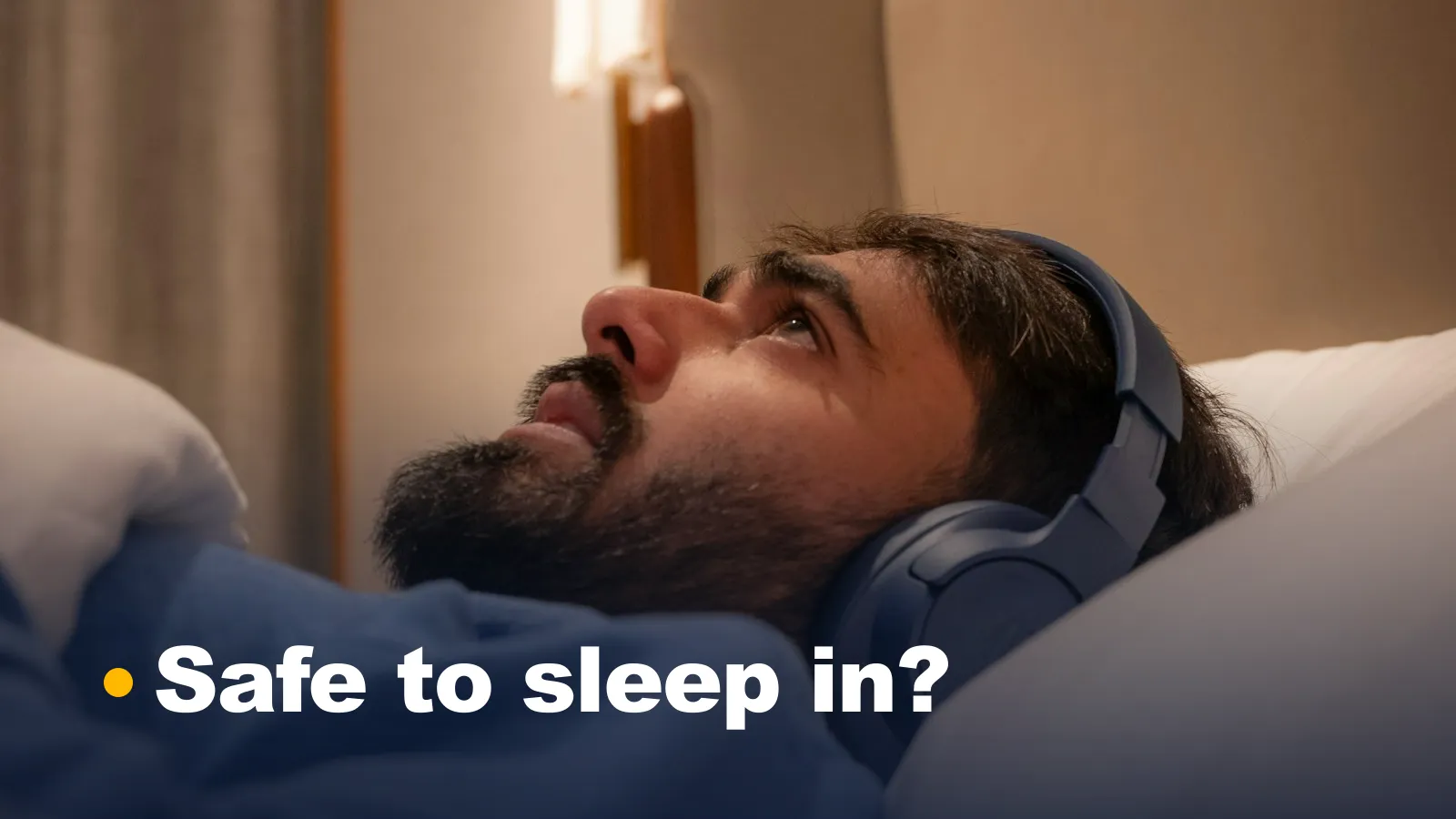
Sleeping with noise cancelling headphones means wearing earbuds or headphones that block outside sound while you fall asleep, often to play music, white noise or rain sounds. Cleveland Clinic's audiologist says it can be OK, but it isn't risk-free. This guide covers the 5 risks, the 4 habits that make it safer, and which devices are best for sleep.
Is it safe to sleep with noise cancelling headphones?
It can be, but it isn't a simple yes. Cleveland Clinic's audiologist Valerie Pavlovich Ruff says sleeping with earbuds can be OK if you take steps to cut the risk, and she advises turning noise cancelling off at night.
Noise cancelling is the feature that uses microphones and opposite sound waves to quiet outside noise. At night, the problem is that it works too well: it can stop you hearing an alarm, a phone call or someone calling for help.
What are the risks of sleeping with headphones?
Cleveland Clinic lists 5 risks of sleeping with earbuds or headphones:
- Hearing damage. Loud audio for hours after you drift off can damage your hearing, and very loud audio can cause harm in as little as 15 minutes.
- Earwax buildup. Earbuds sit in the ear canal and can push earwax deeper, causing temporary hearing loss, ringing or a blocked feeling.
- Infection. Earbuds after a shower can trap moisture, a warm, damp setting that raises the risk of outer ear infection, also called swimmer's ear.
- Discomfort. Side sleepers can have earbuds pressing into the ear all night, and poorly fitting earbuds can damage the skin of the ear canal over time.
- Safety. Noise cancelling can make it harder to hear a phone call, an alarm or an emergency.
How can you sleep with headphones more safely?
Sleep with headphones more safely in 4 steps, according to Cleveland Clinic:
- Keep the volume low. About half or lower, quiet enough that you'd still hear someone speaking to you.
- Use a sleep timer. Let the audio switch off after you fall asleep instead of playing all night.
- Skip noise cancelling. Keep some awareness of your surroundings.
- Clean your earbuds weekly. Earwax, sweat and skin oils build up and carry bacteria.
Which is better for sleep: earbuds, headphones or a speaker?
A speaker near the bed is the safest choice, followed by over-the-ear or headband headphones, with earbuds last. Cleveland Clinic's audiologist says earbuds are not the best choice for sleeping because they sit in your ear.
| Option | Pros | Cons |
|---|---|---|
| Speaker by the bed | Nothing in or on your ears; easy volume and timer control | Your partner hears it too |
| Sleep headband | Made for comfort and longer wear | Sound still plays right at your ears |
| Over-the-ear headphones | Not in the ear canal | Sound still plays right at your ears |
| Earbuds | Small and private | Earwax, moisture and pressure risks |
Our Ozlo Sleepbuds review and HAKII headband headphones review look at 2 devices built for wearing in bed.
When should you see a doctor?
See a doctor if you notice ear pain, hearing changes or signs of infection, as Cleveland Clinic advises. A healthcare provider may also need to remove earwax that earbuds have pushed deep into the ear canal.
To see how your sleep changes with or without audio at night, a sleep tracker helps. Our guide to what a smart ring is explains how rings track sleep from your finger.
Common questions
Is it safe to fall asleep with noise cancelling headphones?
It can be, if you keep the volume low and use a timer. Cleveland Clinic's audiologist advises skipping noise cancelling at night, because it can stop you hearing a phone call, an alarm or an emergency.
What is the 60/60 rule for AirPods?
It's a rule of thumb audiologists suggest for any earbuds: listen at no more than 60% of maximum volume for no more than 60 minutes at a time. For sleep, Cleveland Clinic advises going lower still, about half volume or less.
Is 100% noise cancellation possible?
No headphones block every sound, and for sleep you shouldn't want them to. Cleveland Clinic advises against fully tuning out the world at night, because hearing your surroundings matters in an emergency.
Are sleep earbuds better than regular earbuds?
Earbuds of any kind sit in your ear canal, which carries the earwax and moisture risks. Cleveland Clinic says over-the-ear headphones or sleep headbands are usually a better choice, because they're not in your ear.
Writes guides and reviews for ProductHunter.